
Lychee Sake: What It Is and How We Brew Ours
Lychee sake is sake that carries the sweet, floral, faintly tart character of lychee fruit. Most of what sits on a US shelf under that name is an import, blended overseas and shipped here. Ours is not. At Colorado Sake Co. in Denver's RiNo Art District, we brew our Lychee Nigori ourselves: an off-dry, cloudy, undiluted sake built on the same Junmai Ginjo base as everything else we make. This is what lychee sake actually is, and how ours gets made.
Quick answer: Lychee sake is a sake that carries lychee character, sweet, floral, and slightly tart, rather than a lychee liqueur or a lychee-flavored cocktail. Colorado Sake Co. brews Lychee Nigori as an off-dry, coarsely filtered nigori on a Junmai Ginjo base, so the fruit sits on rice, not on sugar syrup.

On this page
Key Takeaways
- Lychee sake is brewed sake carrying lychee character. It is not a lychee liqueur, and it is not a cocktail poured over ice at a bar.
- Colorado Sake Co. brews Lychee Nigori on our house Junmai Ginjo base, using American-grown rice and reverse-osmosis water rebuilt to the mineral balance of Miyamizu.
- Nigori is coarsely filtered rather than pressed clear, so fine rice solids stay in the bottle. Those solids give the lychee body to sit in.
- Every sake we make is genshu, undiluted, so the fruit lands on full press strength rather than on sugar and water.
- Serve it cold (38-42F). It is our house match for street tacos, al pastor or carnitas.
What Exactly Is Lychee Sake?
Lychee sake is sake, brewed from rice, water, koji and yeast, that carries the aroma and flavor of lychee: rose, white grape, a tropical sweetness with a tart edge that keeps it from going flat. Some sake produces fruit notes on its own from fermentation, melon, pear, even banana, but lychee is not one of those. Lychee character comes from lychee, added to a finished sake.
That is the part almost nobody writing about this actually explains, because almost nobody writing about it has made any. Most articles you will find on "lychee sake" are describing an imported bottle the author has never brewed, tasted next to its base sake, or watched change over a week in a tank. We brew ours, so here is the honest version: the base sake decides most of what you taste, and the lychee decides the rest. A thin, over-diluted base makes lychee taste like candy. A full-strength base with body underneath it makes lychee taste like fruit.
If sake itself is new to you, start with our complete guide to sake and come back. The rest of this post is about what happens in our tanks.
Brewing Sake: The Colorado Sake Co. Way
Before any fruit goes near it, the sake has to exist. At Colorado Sake Co., the first and only licensed sake brewery in Colorado, we have been brewing since 2016 and pouring in our RiNo taproom since 2018, and the process looks a lot more like brewing beer than making wine.
It starts with rice, not grapes. We use American-grown Jupiter or Titan rice from Isbell Farms in England, Arkansas, with Yamada Nishiki reserved for special batches. The rice is milled to a target seimaibuai, the share of each grain still left after polishing, stripping the outer layers back toward the starchy heart. That milling strips away the proteins and fats that turn into off-flavors, which is why nearly everything we brew is Junmai Ginjo grade.
Water matters just as much. We make our own reverse-osmosis water and add salts back in to rebuild the mineral balance of Miyamizu, the famous brewing water of Japan's Nada region. Miyamizu is hard water, and that surprises people. What makes it famous is not the hardness itself but the mineral profile: rich in potassium and phosphorus, which feed a healthy ferment, and almost free of iron, which would dull the color and flavor. Those are the fermentation-friendly minerals that keep koji and yeast happy.
Then comes the moromi, the main mash, and this is where the base character of a lychee sake is really decided. We ferment cold: starting near 6C (43F), climbing slowly to a 9.5-10.5C (49-51F) peak, then easing back to about 5C (41F) in the days before pressing, a fermentation of roughly 24-35 days. A slow cold ferment builds an aromatic, clean sake with real texture. That texture is what a fruit addition later has to sit on.
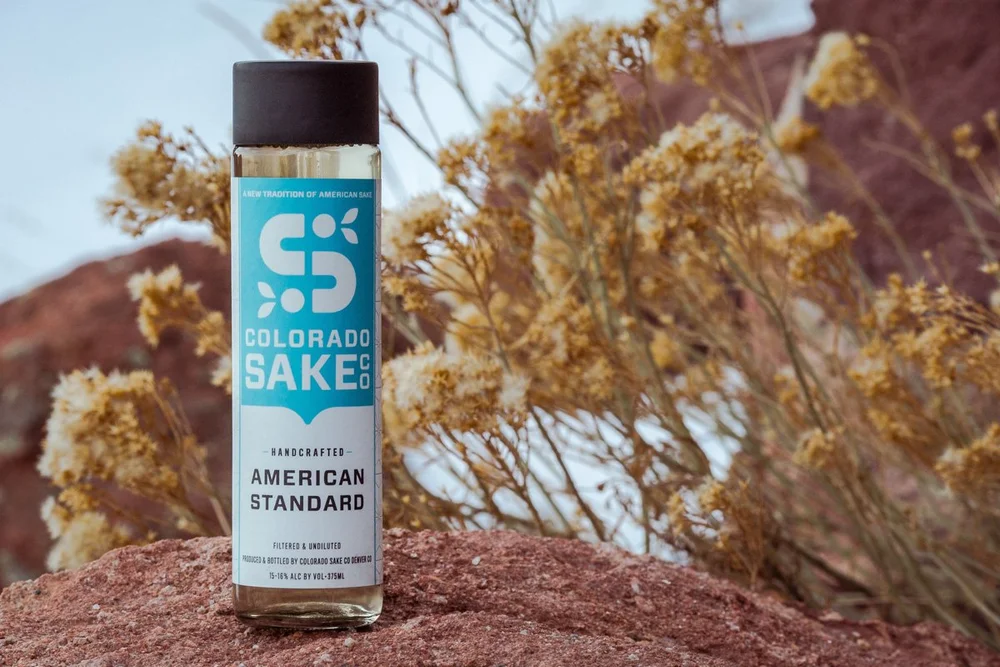
Our Lychee Nigori: A Taste of the Tropics in RiNo
Our lychee sake is a nigori, and that is a deliberate choice rather than a stylistic accident. Nigori is coarsely filtered sake: it still goes through the press, but the filter is loose enough to leave the fine rice solids in the bottle (our full guide to nigori sake covers the style itself in full, so we will not repeat it here).
What matters for lychee is that those suspended solids give the fruit somewhere to live. A clear sake carries aroma beautifully, but it gives the fruit no texture to sit in, so lychee tends to read as perfume on top of it. The creamy body of a nigori wraps around the fruit instead. The fruit arrives with the texture instead of ahead of it, and it lingers instead of flashing and vanishing.
The other half of the answer is strength. Every sake we brew is genshu, undiluted, with no water added after pressing, so the bottle pours at full press strength, 15-16% ABV. That matters more than it sounds. Most sake is brought down to bottling strength with water, which is a normal and perfectly good tool. We skip it, because full press strength leaves more body and more alcohol underneath the fruit. That is what keeps ours off-dry rather than sweet, instead of a bottle that tastes like hard candy.
Serve it cold, 38-42F (3-6C), which is how we recommend most sake. Expect fragrant lychee on the nose, a smooth, creamy palate, and a gentle sweetness that does not turn cloying. For food, it is our house match for street tacos, al pastor or carnitas, where the tropical fruit cuts through the richness and rides along with the spice.
Lychee Sake vs. Lychee Liqueur vs. a Lychee Cocktail
Search "lychee sake" and you get three different products wearing the same name. They are not interchangeable, and knowing which one you want is most of the battle.
Lychee sake is brewed sake, made from rice, water, koji and yeast, carrying lychee character. It drinks like sake: rice body, sake acidity, wine-ish strength. Our Lychee Nigori is this.
Lychee liqueur is not sake at all. It is a sweetened, usually neutral-spirit-based bottling built for mixing, typically much sweeter and often lower in real fermented character. Nothing wrong with it, it just is not sake, and pouring it into a glass on its own tends to be a lot.
A lychee cocktail, the lychee martini above all, is a drink made from any of the above plus other ingredients. It is a recipe, not a bottle. Plenty of people search for "lychee sake" when what they actually want is that drink, which is why we wrote the ultimate guide to lychee martinis separately.
The short version: if you want a bottle to drink, you want lychee sake. If you want a drink to build, start with the martini guide, then pick your bottle.
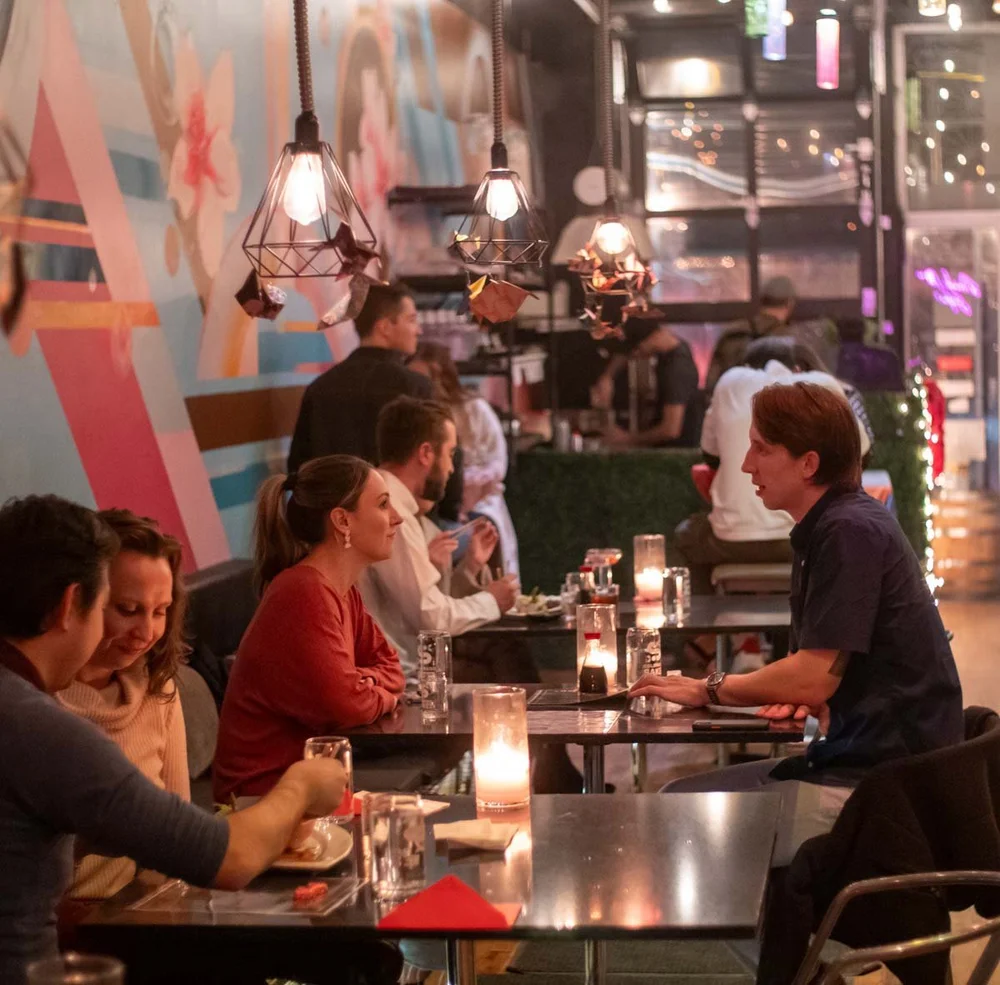
Beyond the Bottle: Lychee Sake Cocktails and Pairings
A nigori mixes better than people expect. The body that carries the fruit also carries a cocktail, so Lychee Nigori shakes into a martini without disappearing behind the vodka, and it lengthens with soda into a spritz that still tastes like something. Recipes and ratios live in our lychee martini guide, and if you want to work further out from there, our sake cocktails guide covers the building blocks and our summer sake cocktails are the easy warm-weather versions.
On the food side, the off-dry tropical character is more flexible than the label suggests. Beyond street tacos, it holds up to spicy, aromatic dishes, green curry, chili crisp, anything with heat and fat in the same bite, and it turns dessert-adjacent alongside a fruit tart without either side fighting the other.
The buying rule of thumb: if a recipe calls for lychee sake, use lychee sake. Substituting a liqueur will make the drink noticeably sweeter and shorter, and you will spend the rest of the build trying to correct for it.
Finding Lychee Sake in Denver
The freshest lychee sake in Denver is the one that never left the building it was brewed in. Lychee Nigori is a staple pour at our RiNo taproom, and it goes home in bottles from the same room.
If you are not in Denver, we ship. Order Lychee Nigori from our online store and it goes out to most states. If you are local, come drink it where it is made, alongside the clean American Standard, the bright Blueberry Hibiscus, or the creamy Horchata Nigori. Either way, you are drinking sake brewed in Colorado rather than an import that spent a season on a boat.
Frequently Asked Questions
What does lychee sake taste like?
Is lychee sake the same as lychee liqueur?
How much alcohol is in lychee sake?
Should lychee sake be served cold?
What to mix with lychee sake?
Get the bottle
Colorado Sake Co. brews Lychee Nigori in Denver's RiNo Art District. Shop Lychee Nigori or visit the taproom.
Keep exploring
Run into a word you did not know? Our Sake Field Guide is a plain-language glossary of the terms on every bottle, from junmai and ginjo to koji, nigori, genshu, and seimaibuai, written by the brewers who use them.