
A sake turkey brine is a regular wet brine (salt, sugar, water, aromatics) with part of the water swapped for sake. The sake does not replace the salt. It is a flavor addition alongside the aromatics, and it gives you a reason to open a bottle in the week before Thanksgiving.
Here is the whole method for your Thanksgiving turkey, in order: measured ingredients, the steps, the timing, and the handling. The food-safety parts follow general USDA guidance for poultry, because that is the right source for them. The sake parts come from a brewer who spends most days thinking about what sake actually carries.
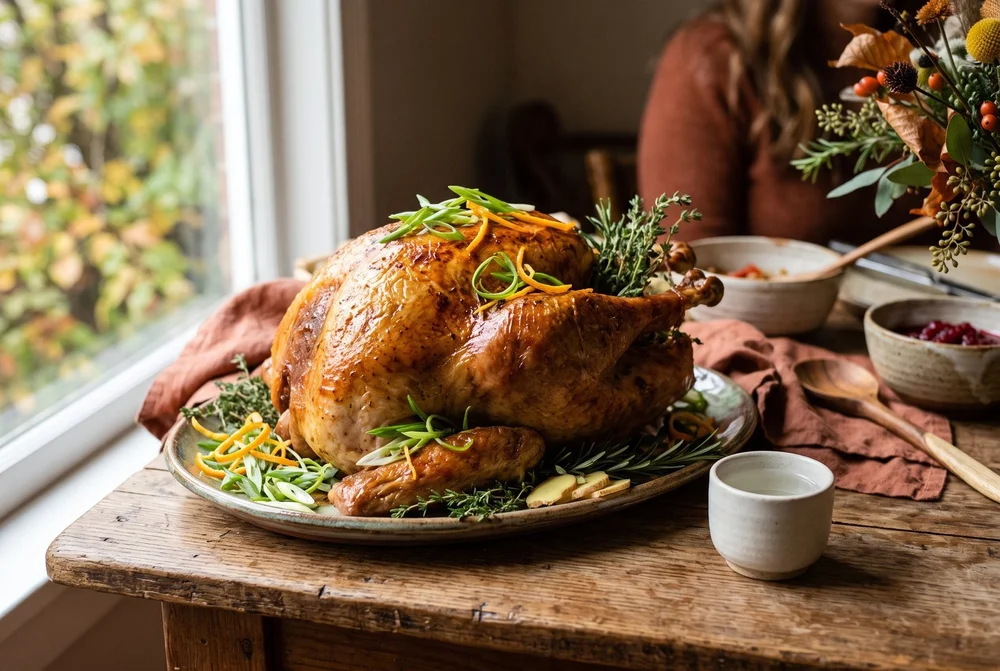
Quick answer: To brine a turkey with sake, dissolve about 140 grams of salt and 1/2 cup of brown sugar per gallon of liquid, using 2 cups of unsalted drinking sake in place of 2 cups of the water. Chill the brine completely, submerge a fully thawed turkey, and keep it at 40°F or below for 12 to 18 hours. Discard the brine, pat the bird dry without rinsing, and roast to 165°F.
On this page
Key Takeaways
- Swap 2 cups of the water in each gallon of brine for unsalted drinking sake, and count it as liquid when you measure the salt.
- Weigh the salt. Kosher salt brands measure very differently by the cup.
- Check the label: cooking sake (ryorishu) can have salt added, and kosher or enhanced turkeys are already salted.
- Keep the turkey and brine at 40°F or below the whole time, then pat dry instead of rinsing and roast to 165°F.
What goes in a sake turkey brine?
Brine the turkey in a food-grade brining bag, a food-safe plastic bucket, or a stainless steel or glass container. Never use a household trash bag. Set a bag inside a rimmed pan or bowl to catch any leaks. How much liquid it takes to keep the bird fully under depends on the bird and the container, so the recipe is written per gallon. Make as many gallons as your container needs. As a rough guide: about 2 gallons for an 8–12 lb turkey, 2½ gallons for 13–17 lb, and 3 gallons for 18–22 lb. To check your container, set the bird in it and add water until it's covered, then measure the water.
Per gallon of brine
- 14 cups cold water
- 2 cups unsalted drinking sake
- About 140 grams of salt (roughly 1 cup Diamond Crystal kosher salt, or 1/2 cup plus 4 teaspoons Morton kosher salt)
- 1/2 cup brown sugar
- A thumb of fresh ginger, sliced
- 4 cloves garlic, smashed
- 4 scallions, cut into lengths
- 1 tablespoon black peppercorns
- A few wide strips of orange peel
Weigh the salt if you can. A cup of one kosher salt can hold far more salt than a cup of another, which is how a brine measured by volume can end up too salty. The sake counts as part of the liquid, so the salt amount stays the same whether you use 2 cups of sake or none.
Want more sake in it? Swap up to 4 cups of the water for sake (12 cups water + 4 cups sake per gallon) and keep the salt the same. Some recipes go much further. H-E-B's sake brine is mostly sake with less salt, but that takes several bottles per turkey.
How do you brine a turkey with sake, step by step?
- Thaw the turkey completely. USDA guidance is to thaw in the refrigerator and plan on about 24 hours for every 4 to 5 pounds, so a large bird needs to go in the fridge several days ahead. Brining does not replace thawing.
- Read the turkey label. If it says kosher or enhanced with a salt solution, it is already salted. Do not brine it. If it says self-basting, read the ingredient list and sodium, since the injected solution can include salt.
- Make the concentrate. Warm about 4 cups of the water with the salt, sugar, ginger, garlic, scallions, peppercorns, and orange peel, stirring until the salt and sugar dissolve. Take it off the heat.
- Add the cold liquid. Stir in the remaining cold water and the sake. Adding the sake off the heat means it goes in cold with the rest of the liquid.
- Chill the brine all the way down. It should be refrigerator cold before it touches the turkey. Never pour warm brine over raw poultry. Check it with a thermometer: 40°F or below.
- Submerge the bird. Remove the neck and giblets, set the turkey in the bag or bucket, and pour in the brine until it is covered. Weigh it down with a plate if it floats.
- Refrigerate 12 to 18 hours. Keep everything at 40°F or below, which is the USDA line for raw poultry. If the turkey will not fit in the refrigerator, a cooler works only if you keep enough sealed ice packs in it to hold 40°F, and check it with a thermometer.
- Drain and pat dry. Lift the turkey out and throw the brine away. Never reuse it. We skip rinsing and simply pat the bird dry with paper towels, which keeps splashing to a minimum. If you do rinse, USDA advises clearing the sink, lining the area with paper towels, and using a slow stream of water. Either way, clean and sanitize the sink and counters afterward.
For crisper skin, set the dried turkey on a rack over a sheet pan and leave it uncovered in the refrigerator for several hours or overnight before roasting.
Why does a brewer put sake in a brine?
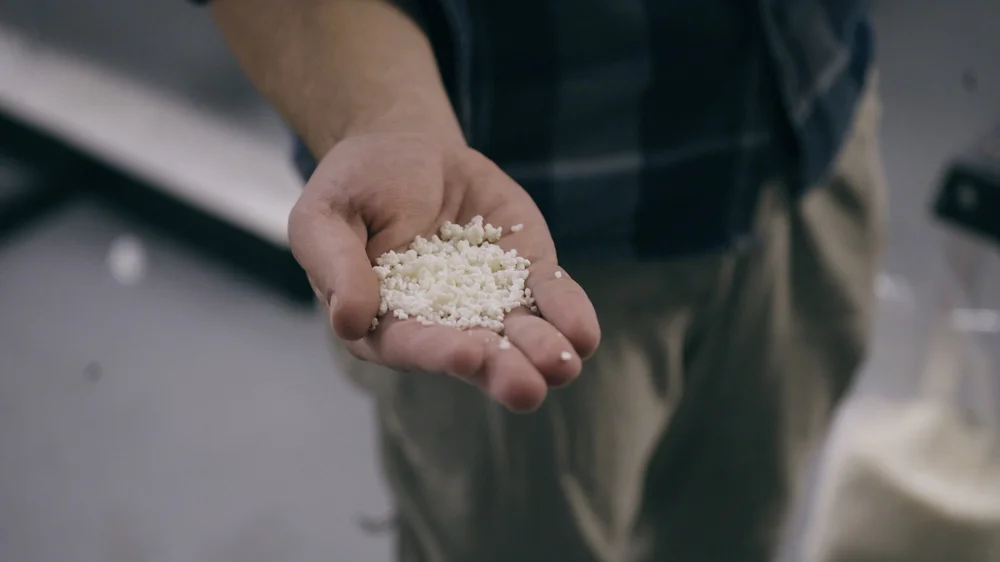
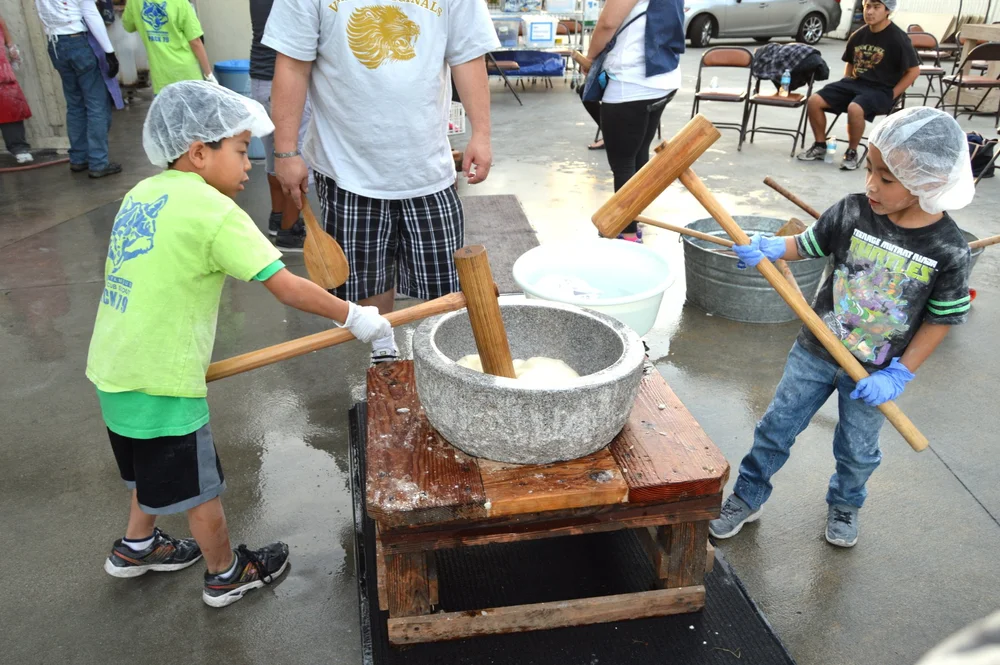
Sake starts as rice, and koji does the work of breaking that rice down. Koji turns the starch into sugar for the yeast, and it also breaks rice protein down into amino acids. Those amino acids are a big part of why sake tastes rounded and savory rather than just sweet or sharp, which we get into in what sake actually tastes like.
In a brine, the sake is a supporting flavor next to the ginger, garlic, and orange peel. If you want the longer version of where the savoriness in sake comes from, our guide to koji, the mold behind every bottle of sake covers it.
What sake does not do is replace the salt. Salt does the seasoning work in a brine. Sake adds flavor around it, so measure the salt the same way you would for a plain brine.
Which sake should you use for a turkey brine?
Use a drinking sake, a bottle sold as a beverage (junmai, ginjo, and similar). Drinking sake normally has no added salt, but a quick label check never hurts. An everyday bottle is fine. Save the special-occasion pour for the glass. Skip flavored sakes, which have fruit or spice added, and keep the brine to the aromatics in the recipe.
A short note on cooking sake. Bottles labeled cooking sake or ryorishu are a different product. Some have salt added, some have sweeteners, and some have neither, so read the label. That matters in a brine because the brine is built around a measured amount of salt. If cooking sake is all you have, read the sodium on the label and cut back the added salt to match, or just use drinking sake and keep the math simple. For the broader picture of cooking sake versus drinking sake, see our guide to cooking with sake in the kitchen.
At our RiNo brewery we brew Junmai Ginjo, and our American Standard is a drinking sake with a clean, slightly sweet melon character and gentle acidity. Any unsalted drinking sake suits this brine, and whatever is left in the bottle is yours.
How do you roast a brined turkey?
Roast the turkey your usual way, with two adjustments for the brine.
- Go easy on salt. The meat is already seasoned. Skip salt on the skin, and taste the drippings before you salt the gravy, because they will be saltier than usual.
- Watch the skin. The sugar in the brine helps the skin brown, so if it darkens before the meat is done, tent it loosely with foil.
USDA guidance is to cook turkey to a minimum internal temperature of 165°F, checked with a food thermometer in the thickest part of the breast, the innermost part of the thigh, and the innermost part of the wing. Let it rest 15 to 20 minutes before carving.
If you stuff the bird, USDA's advice is to bake the stuffing separately instead. If you do stuff it, brine first, stuff right before roasting, and make sure the center of the stuffing reaches 165°F.
Planning ahead for Thanksgiving: thaw first, brine the day before, and dry the bird overnight if you have the refrigerator space. Before Thanksgiving, visit the RiNo taproom or order a bottle from the online sake store.
Frequently Asked Questions
How much sake goes in a turkey brine?
Can I use cooking sake (ryorishu) in a turkey brine?
How long should a turkey sit in a sake brine?
Do you rinse a turkey after brining?
Should a turkey be refrigerated while it brines?
Can I brine a kosher or pre-brined turkey?
Come taste it for yourself
Colorado Sake Co. pours sake in the RiNo Art District. Visit the taproom or order sake online.
