
How to Drink Sake: Temperature, Etiquette & the Right Cup
Quick answer: Serve aromatic sake (Daiginjo, Ginjo) chilled to 41–50°F to highlight its aromatics; gently warm robust Junmai styles to 100–115°F for umami and body. Sip it slowly to savor the aromatics, pour for your companions rather than yourself, and use a small ochoko cup, or a wine glass for aromatic styles.
On this page
Key Takeaways
- Sake's ideal serving temperature varies widely by style, from deeply chilled Daiginjo to warm Junmai.
- Traditional etiquette centers on pouring for others, not yourself, as a sign of respect.
- Glassware, from a small ochoko to a wine glass, noticeably changes the tasting experience.
- Colorado Sake Co. brews fresh, unpasteurized sake in Denver's RiNo Art District.
Why Does Temperature Matter So Much?
Sake isn't a "one temperature fits all" drink. Unlike most wines, which have a fairly narrow serving window, sake expresses itself across a huge range, from deeply chilled to piping hot. That flexibility is one of its most fascinating qualities.
Think of it like craft beer: a crisp pilsner is best ice-cold, while a rich stout opens up closer to cellar temperature. Sake works the same way. Its brewing process, built on koji mold (Aspergillus oryzae) and multiple parallel fermentation, creates a spectrum of flavors that react differently to heat.
Chilled Sake: Unveiling Aromatics
Many premium sakes, especially Ginjo and Daiginjo, are crafted to be aromatic and delicate, with fruity notes of apple, pear, or melon and soft floral undertones. Chilling preserves those volatile aromatics and keeps the sake crisp and refreshing.
At Colorado Sake Co., our unpasteurized nama sake is always served chilled to show off its bright, fresh character. If you see a Daiginjo on a menu, ask for it chilled.
Warm Sake: Comfort and Umami
Warming sake is an art that can transform robust Junmai and Honjozo styles, gentle heat softens their edges and brings forward earthy, nutty, savory (umami) notes. It's especially comforting on a cold Colorado evening.
The key word is gentle. Overheating destroys the balance and creates harsh alcohol notes. The classic warm range runs from nurukan (lukewarm, ~104°F/40°C) up through atsukan (hot, ~122°F/50°C). At home, stand a tokkuri (carafe) in a pot of hot water, like a double boiler, and warm it slowly, pull it out before it gets too hot, since most styles peak well short of a rolling boil.
Room Temperature: The "Goldilocks" Zone
Balanced sakes that aren't overly aromatic or robust often shine at room temperature, around 60–70°F (15–20°C), a state called hiya. It lets the full range of flavor and aroma express itself without being muted by cold or altered by heat. If you're unsure where to start, room temperature is a safe baseline before you experiment.
Serving Temperature by Style
Sake has named temperature bands, each with its own character. Use this as a starting point, then trust your own palate:
| Style / band | °F | °C | Japanese term | Why |
|---|---|---|---|---|
| Chilled (aromatic, Daiginjo, Ginjo, nama) | 41–50°F | 5–10°C | Yukibie / Hanabie | Locks in delicate fruit and floral aromatics; keeps the sake crisp and clean. |
| Room temperature (balanced styles) | ~68°F | ~20°C | Hiya | Lets the full range of flavor and aroma express itself, unmuted by cold or heat. |
| Warm, skin temperature (Junmai, Honjozo) | ~95°F | ~35°C | Hitohada-kan | Gently softens edges and opens up rice-driven richness without harsh alcohol. |
| Lukewarm (robust Junmai, Honjozo) | ~104°F | ~40°C | Nurukan | The cozy sweet spot, rounds out umami and savory, nutty notes. |
| Hot (sturdy, earthy styles) | ~122°F | ~50°C | Atsukan | Bold and warming for cold evenings; best with hearty, full-bodied sake. |
Aromatic premium styles rarely benefit from heat, warmth is generally reserved for fuller-bodied Junmai and Honjozo.
A Mile-High Note
At Denver's altitude, right around a mile above sea level, lower air pressure can make alcohol come across a touch hotter on the nose. A practical takeaway: serving aromatic styles well-chilled keeps that lift in check, and a gentle warm rather than a hot pour often suits richer styles better up here. We brew and serve our fresh, unpasteurized sake right in the RiNo Art District, so it's tuned to a mile-high palate. We serve our house nama chilled to a brisk 38–42°F (3–6°C) to show off its bright, fresh character. In winter, or any time a guest wants hot sake, we like gently warming a robust pour to 120–140°F (49–60°C).
Sake Vessels: Choosing the Right Cup
Just as a wine glass is designed to enhance wine, the sake cup shapes the experience. Traditional Japanese vessels are beautiful and functional, but don't feel limited to them. The "right" cup is the one that helps you enjoy your sake most.
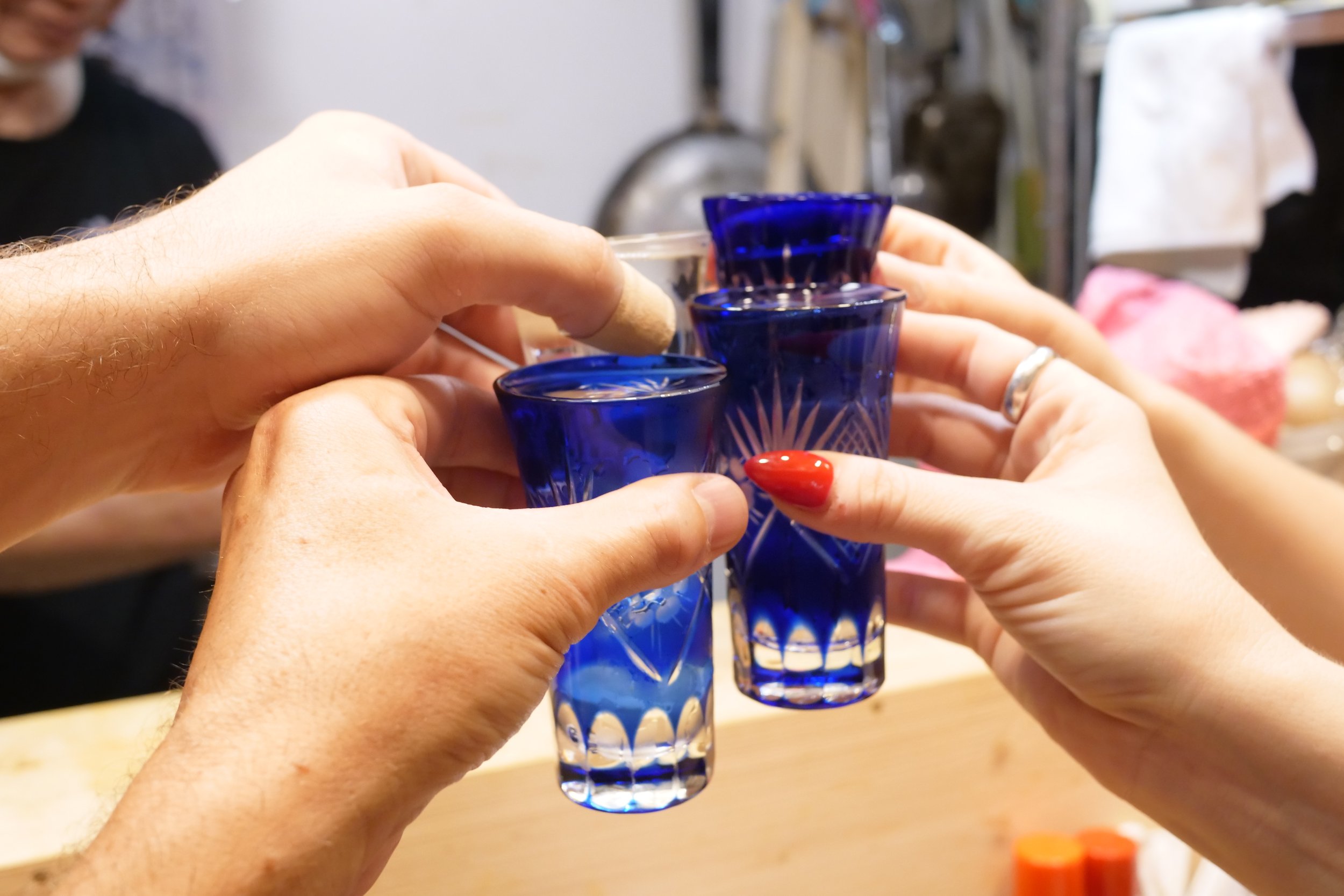
Traditional Cups: Ochoko, Guinomi, and Masu
- Ochoko: small ceramic or porcelain cups holding 1–2 ounces. Their size encourages frequent pouring and sipping, a cornerstone of sake etiquette.
- Guinomi: a little larger than an ochoko, giving the aroma more room to develop. Often artisanal and decorative.
- Masu: a square cedar box once used to measure rice. Filling it to the brim is a gesture of generosity, and the cedar lends a distinct aroma, which some love and others find distracting.
Modern & Western Options
Don't hesitate to use stemware. A white-wine glass with a narrower bowl is excellent for aromatic sake, the stem keeps your hand from warming it, and the bowl concentrates the aromas. For richer, fuller-bodied styles, a wider tumbler works well for casual sipping. At our taproom we use a mix of traditional cups and stemless wine glasses to help you find the nuances in each pour.
Sake Etiquette: Sharing and Respect
Even with our easygoing American craft-brewery vibe in RiNo, a little etiquette deepens the experience and connects you to sake's roots. The core idea is hospitality, pouring for one another. As the Japan Sake and Shochu Makers Association notes, sake is traditionally enjoyed communally.
- Never pour your own: the golden rule. Pour for your companions and let them pour for you. If your cup is empty, lift it slightly to signal a refill.
- Pour with both hands: hold the tokkuri with both hands as a sign of respect.
- Receive with both hands: hold your cup with both hands (or one hand supporting the base) and give a slight nod of thanks.
- Sip before setting it down: it's customary to take a small sip before putting your cup back on the table.
- Toast: a simple "Kanpai!" is always right.
- Pace yourself: sake is usually around 15–16% ABV, a touch higher than most wine, it's made to be sipped and savored. (In the U.S., sake is regulated as a wine by the Alcohol and Tobacco Tax and Trade Bureau (TTB).)
These are guidelines, not rules, especially in a casual taproom. The point is to enjoy the company and the sake.
Pairing Sake with Food
Once you've dialed in temperature and cup, sake's gentle umami and lower acidity make it a natural at the table, far beyond sushi. For the full breakdown of what to eat with each style, see our guide to sake food pairing.
Beyond the Basics
Once the fundamentals click, there's a whole world to explore. Try cloudy Nigori sake, aged Koshu, or innovations like sake cocktails and sake seltzer. Look for sakes brewed with specific rice varieties like Yamada Nishiki or Gohyakumangoku and notice how they differ. We've been brewing fresh, unpasteurized sake in the RiNo Art District for years, bridging an ancient craft with a modern Colorado sensibility, and we love helping people find their new favorite pour.
Frequently Asked Questions
Do you drink sake hot or cold?
What should I mix with sake?
Is sake stronger than wine?
Is sake gluten-free?
Come taste it for yourself
Colorado Sake Co. pours fresh, small-batch sake in the RiNo Art District. Visit the taproom or order sake online.
Colorado Sake Co. serves guests 21+. Please enjoy sake responsibly.
Keep exploring
Run into a word you did not know? Our Sake Field Guide is a plain-language glossary of the terms on every bottle, from junmai and ginjo to koji, nigori, genshu, and seimaibuai, written by the brewers who use them.