
The Colorado Sake Co. Field Guide to Sake
By William Stuart, Founder, Colorado Sake Co.
Most sake explainers online are written by people who have never run a tank. This one is not. We founded Colorado Sake Co. in 2016 and opened our RiNo brewery and taproom in September 2018, and we are the first and only licensed sake brewery in Colorado. Every term below is grounded in something we actually do on the floor: a real press day, a 60 percent polishing ratio, a tank we held at six degrees Celsius for a month, a lab log with the readings to prove it. Read it the way you would talk to a brewer across the bar: plain, specific, and honest about what we know.
On this page
The entries run roughly in order of how often people search for the term and how much of our own brewing we can put behind it. Front-door terms come first, deeper process terms come later. This is a glossary built by a working brewery, not a dictionary borrowed from a textbook.
Start here: the words on every label
These are the highest-demand terms and the ones where our brewery proof is strongest. They lead.
Sake
What it means. Sake is an alcoholic drink brewed from rice, water, koji, and yeast. People call it "rice wine," but that name misses how it is actually made. Wine is pressed and fermented from fruit sugar. Sake is brewed more like beer, with grain converted to sugar first, then fermented. The result typically bottles at 15 to 16 percent ABV, served cold, at room temperature, or warmed.
How it shows up in our tanks. We founded Colorado Sake Co. in 2016 and opened our RiNo brewery and taproom in Denver in 2018, and we are the first and only licensed sake brewery in Colorado. Nearly everything we make is Junmai Ginjo: rice polished to 60 percent before it ever hits a tank. We make our own reverse-osmosis water and add salts back in to match the mineral balance of Miyamizu, the famous brewing water of Japan's Nada region. Our base sake, American Standard, ferments cold and slow, starting near 6C (43F), climbing to a 9.5 to 10.5C (49 to 51F) peak, then easing back to about 5C before pressing, a fermentation of roughly 24 to 35 days. Every other release we sell branches off that same base batch. We log every reading in our lab sheet, so when we tell you a tank ran at 49F on day twelve, that is a measurement, not a brochure. See also: how sake is made and what is sake.
What it tastes like / where to try it. Start with American Standard, our Junmai Ginjo. It is clean and slightly sweet, with a gentle melon character and soft acidity, bottled at 15 to 16 percent ABV. Pour it cold, the way we recommend most of our sake, at 38 to 42F. You can find it in our online shop or taste it next to the others at the taproom at 3559 Larimer Street.
What American drinkers get wrong. Three things, mostly. First, "saki" is just a common misspelling; the drink is sake, and the word covers a whole category, not one bottle. Second, "rice wine" makes people expect something sweet and wine-strength; sake is brewed grain, not pressed fruit, and tends to be cleaner and drier than they guess. Third, cloudy nigori like our Horchata Nigori or Lychee Nigori throws people off: the haze is just unfiltered rice solids left in, not a different or stronger drink. Good sake is not meant to be served scalding hot. We serve most of ours cold and only warm a robust pour to 120 to 140F when a guest asks for it.
Saki (sake vs. saki)
What it means. "Saki" is the way a lot of Americans spell the drink when they go by sound instead of the page. The drink is sake, brewed from rice, water, koji, and yeast. There is no separate thing called saki. It is the same pour, just typed phonetically. Say it closer to "sah-keh," with a soft second syllable, not "sah-kee."
How it shows up in our tanks. There is no product, grade, or style named saki. Everything we make in our RiNo taproom, open since 2018, is sake, and nearly all of it is Junmai Ginjo, with the rice milled to exactly 60 percent, including our flagship American Standard. Every batch we run starts as American Standard, and from there we take it in different directions: we swap yeast strains often to try new things, and a second fermentation drives our flavored and nigori releases. The name on the tank, the lab sheet, and the bottle is always sake. We track each batch by hand on a fermentation log (temperature, pH, ABV on an Anton Paar density meter), and "saki" never appears on any of it because it is a spelling, not a drink. Read more: sake vs. saki explained.
What it tastes like / where to try it. If you searched "saki" and landed here, the pour you are picturing is real, we just spell it sake. A good first one is American Standard, our Junmai Ginjo flagship: clean, slightly sweet, with a melon-forward character and gentle acidity, bottled at 15 to 16 percent ABV. You can find it in our online shop or poured at the taproom at 3559 Larimer Street.
What American drinkers get wrong. Three things, usually. First, the spelling: "saki" feels right because of how it sounds, but it is not a separate product, and it is not a sign of a different or cheaper drink. Second, the pronunciation: it is "sah-keh," not "sah-kee." Third, people assume sake is a spirit or a shot. It is brewed, like beer, not distilled, and ours finishes around 14 percent in the fermentation tank before pressing and bottles at 15 to 16 percent ABV. Calling it saki and calling it a shot tend to travel together, and both are off.
Sake alcohol content (ABV)
What it means. ABV is the share of a drink that is pure alcohol, by volume. Sake usually lands a notch above most wine, finishing at 15 to 16 percent ABV in the bottle. There are two numbers worth knowing: the in-tank moromi reading (what the fermenting mash reads day by day, usually around 14 percent by press day) and the bottled ABV (what is on the label, finished and ready to pour). They tell different parts of the same story.
How it shows up in our tanks. We watch alcohol climb in real time on an Anton Paar density meter. Every Colorado Sake Co. release starts as American Standard, our Junmai Ginjo base sake, and we log each batch as it ferments cold. One real February 2026 batch read just 2.4 percent the day after the first additions and climbed all the way to 14.3 percent by its final moromi reading before pressing, a run of about 31 days. A March batch went from 5.1 percent up to 14.3 percent on press day, and a May batch ran from 6.0 percent up to 14.2 percent. Each a little different, and that spread is the craft, not a mistake. Those are pre-press readings inside the tank. Once pressed and finished, our bottled sake lands at 15 to 16 percent ABV on the label. Both numbers are real: the moromi reading tracks what the yeast is doing day by day inside the tank; the bottled figure is what you pour from the bottle. See the interactive batch timeline below for the full in-tank record. More context: sake alcohol content vs. wine.
What it tastes like / where to try it. American Standard is the pour to taste this in. House note: clean, slightly sweet melon character with gentle acidity, bottled at 15 to 16 percent ABV. It carries that strength without drinking hot or sharp, which is the whole appeal of cold, slow fermentation. Pour it cold, around 38 to 42F.
What American drinkers get wrong. People assume sake is a spirit, like a shot, and brace for something around 40 percent. It is brewed, not distilled, and ours finishes at 15 to 16 percent in the bottle. The pre-press moromi reads around 14 percent in the tank, which already surprises people who pictured something lighter. "Rice wine" is a loose nickname; sake is fermented from steamed rice and koji, closer in process to beer than to grape wine, even though the strength reads more like wine. Nigori, the cloudy unfiltered style, often tastes softer and sweeter, so people guess it is weaker, but cloudiness is about what was filtered out, not about how much alcohol is in the glass.
Nigori
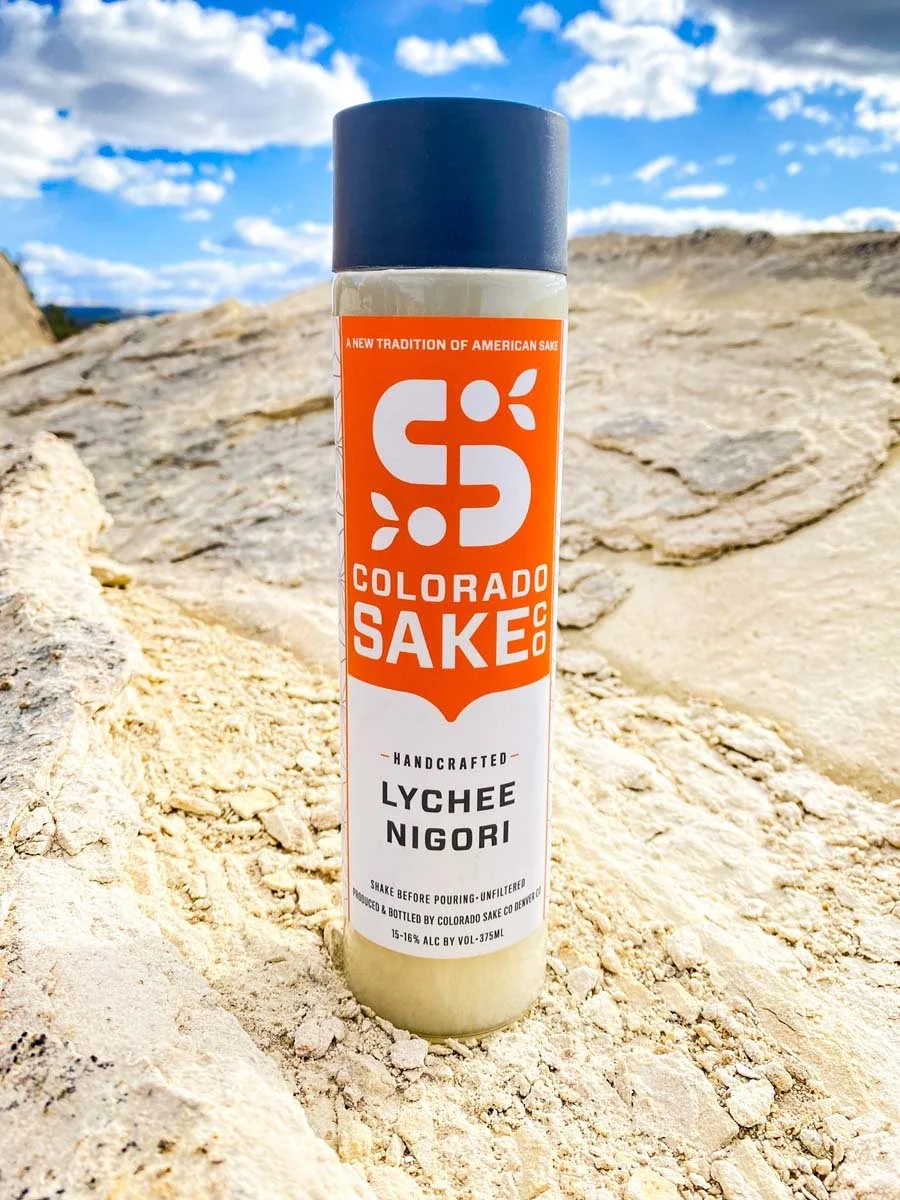
What it means. Nigori is sake that keeps some of its rice in the glass. Most sake gets pressed and then filtered until it runs clear. Nigori skips the hard filtering, so fine rice solids stay suspended and the liquid turns cloudy, soft, and a little sweet. The word points at that cloudiness, not at any one flavor. Give the bottle a gentle roll before you pour and the cloud settles back into the sake.
How it shows up in our tanks. Everything we brew in our RiNo taproom, open since 2018, starts the same way, as our base sake, American Standard. We ferment that mash cold for weeks, watching the alcohol climb to around 14 percent in the moromi, then we reach the part that decides whether a sake is clear or cloudy: press day. Our own fermentation log marks it plainly, "separating the sake from the lees (kasu)." In general, a clear sake gets pressed and filtered until the rice solids are gone, while a nigori holds some of that rice back so the bottle keeps the body and faint sweetness the rice leaves behind. That single choice at the press is the whole difference. See also: nigori sake 101.
What it tastes like / where to try it. We pour two nigori on the live store, and the house notes are the honest description:
- Horchata Nigori is a creamy body with gentle cinnamon-and-vanilla sweetness, bottled at 15 to 16 percent ABV.
- Lychee Nigori is off-dry with tropical fruit, bottled at 15 to 16 percent ABV.
Both are nigori built on our Junmai Ginjo base. If "cloudy and a little sweet" sounds like your speed, start with the Horchata.
What American drinkers get wrong. People see the cloud and assume nigori is a dessert, syrupy and barely alcoholic. It is sake, bottled at 15 to 16 percent ABV, the same as our clear bottles; the cloud is just unfiltered rice, not added sugar. The other one is the spelling: it is sake, not "saki," brewed from rice, not distilled. Nigori being cloudy does not make it weaker, sweeter by design, or any less of a real sake than the clear pour next to it on the shelf.
Rice wine
What it means. "Rice wine" is the catch-all English label people reach for when they meet sake, because grapes mean wine and this is clearly not grape. It is a useful shorthand and a slightly wrong one. Wine ferments sugar that is already in the fruit. Sake has to make its sugar first, from rice starch, and then ferment it, both happening at once in the same tank. Same family of pleasures, different machinery. Read more: what is rice wine?
How it shows up in our tanks. In a grape wine the sugar is sitting there waiting. In our tanks, koji mold is breaking rice starch down into sugar at the same moment the yeast is eating that sugar into alcohol. Two jobs, one tank, side by side. Brewers call it parallel fermentation, and you can watch it happen in our own lab numbers. Our February 2026 American Standard batch starts at an SMV (sake meter value, our sweet-to-dry gauge) of -64.9, deeply negative because the mash is flooded with koji-made sugar. Over about 31 days held cold, that number climbs: -53.4, then -43.3, then -26.0, while alcohol rises from 2.4 percent to 14.3 percent on the last moromi reading before pressing. Once pressed and finished, the bottles land at 15 to 16 percent ABV. The sugar is not disappearing on its own. The koji keeps making it and the yeast keeps eating it, and the curve is the two of them racing. Every figure here is measured, not modeled, from our 2026 lab and fermentation log.
What it tastes like / where to try it. If you want to taste the result of that parallel-fermentation curve, our American Standard is the one to start with. It is the base sake every Colorado Sake Co. batch begins as, the exact ferment those SMV numbers come from, bottled at 15 to 16 percent ABV. House note: clean, slightly sweet melon character with gentle acidity.
What American drinkers get wrong. The "rice wine" label makes people expect something wine-strength and wine-sweet, and then they brace for a hard pour. Two corrections. First, the method is closer to brewing beer than to making wine, because the starch has to be converted to sugar before anything can ferment, which is why "brewery" is on our door and not "winery." Second, finished sake is not the firewater people imagine. Our moromi batches read right around 14 percent in the tank before pressing; the finished bottles land at 15 to 16 percent ABV, which is on the fuller end of wine strength but nowhere near a spirit.
How sake is actually made
These terms carry the high-demand "types of sake" and "how sake is made" pages. Each leans on our real grade, our real polishing ratio, or our real fermenting tank.
Junmai Ginjo
What it means. Junmai Ginjo is a grade, not a flavor. "Junmai" means the sake is brewed from only rice, water, koji, and yeast, with no added distilled alcohol. "Ginjo" means the rice was milled down so at least 40 percent of every grain is ground away before brewing, leaving 60 percent or less. Polish that hard, ferment cold, and you get a cleaner, more fragrant, fruit-forward pour. Together they describe a premium tier of pure-rice sake. See: types of sake explained.
How it shows up in our tanks. This is exactly what we brew. We founded Colorado Sake Co. in 2016 and have been brewing in Denver's RiNo Art District since our taproom opened in 2018. Nearly everything that leaves Colorado Sake Co. is Junmai Ginjo, milled to exactly 60 percent at the house level, which means about 40 percent of every grain is polished away before it ever sees water. We hit the grade the long way. The mash is built in staged additions of rice, koji, and water (a method called sandan-shikomi), then held cold in the single digits Celsius for three to four weeks, starting near 6C, climbing to a 9.5 to 10.5C peak, then easing back toward 5C before pressing. Cold and slow is the whole point, because that is what gives ginjo-class sake its clean, fruity character. Our rice is American-grown, usually Jupiter or Titan from Isbell Farms in England, Arkansas, with Yamada Nishiki for special batches.
What it tastes like / where to try it. Try our flagship, American Standard, a Junmai Ginjo with a clean, slightly sweet melon character and gentle acidity, bottled at 15 to 16 percent ABV. We do not embellish it. It is the base every CSC batch starts from, so it is the truest taste of our house grade. Come drink it cold at the taproom on Larimer Street or find it in our online shop.
What American drinkers get wrong. Most people hear "ginjo" and assume it is a style or a brand. It is not. It is a milling spec. The "60 percent" is not the alcohol and it is not how much rice is left in the glass; it is how much of each grain survives the polishing stone. People also expect a fancier grade to taste stronger or heavier. It is usually the opposite. More polishing strips the grain's outer layers, so the sake reads cleaner and more aromatic, not bigger. Our 2026 American Standard moromi batches all landed around 14 percent in the tank before pressing (14.3, 14.3, 14.2 percent across three runs); the finished bottles come out at 15 to 16 percent ABV. Grade and strength are separate questions.
Seimaibuai (rice polishing)
What it means. Seimaibuai is the share of each rice grain that is left after milling, written as a percentage. A lower number means more of the grain was ground away before brewing. Polishing strips the grain's outer layers, where the fats and proteins live, and leaves the starchy center. That center is what brewers want, because it ferments into something cleaner and more fragrant than whole rice would.
How it shows up in our tanks. Nearly everything we brew in our RiNo taproom, open since 2018, is Junmai Ginjo, milled to exactly 60 percent at the house level. Sixty percent left means about 40 percent of every grain is milled away before it ever touches water, the cutoff where sake legally earns the Ginjo grade. Our flagship American Standard sits at that 60 percent mark, and it is the base every other release branches off from. Polishing is also the most quietly expensive decision a small brewery makes: the more you mill, the more rice you buy to fill the same tank. See the interactive seimaibuai slider below to explore where 60 percent sits on the full grade scale. More: how sake is made.
What it tastes like / where to try it. That 60 percent polish is the reason American Standard drinks the way it does: clean, slightly sweet melon character with gentle acidity, bottled at 15 to 16 percent ABV. Order it at the taproom or in our online shop and you are tasting the 60 percent ratio directly.
What American drinkers get wrong. The common assumption is that more polishing always means better sake. It does not. A lower seimaibuai makes a lighter, more aromatic, more delicate pour, but a less-polished sake is fuller, more savory, and often the better match for bold food. Different, not lesser. The other miss: people picture "polishing" as buffing the grain shiny, like a stone. It is closer to grinding the grain smaller and throwing the outside away. At 60 percent we are discarding 40 percent of the rice on purpose, before fermentation even starts.
Moromi (main mash)
What it means. Moromi is the main mash, the big working tank where sake actually becomes sake. Rice, koji, water, and yeast all sit together and ferment as one. Two things happen at the same time in that tank: the koji keeps breaking rice starch down into sugar, and the yeast keeps eating that sugar and turning it into alcohol. It is the long middle stretch of a brew, the part that takes weeks, not minutes.
How it shows up in our tanks. We build our moromi in staged additions of rice, koji, and water (the method called sandan-shikomi) and then hold it cold for weeks. We can show you exactly how cold, because we logged it. Three real 2026 batches of American Standard, our base sake, each with 13 to 14 measured lab readings. Two of them ran all the way to press day; the third is the most recent tank, logged up to its latest reading. The tank starts near 6C (43F), climbs slowly to a peak around 9.5 to 10.5C (49 to 51F), then eases back toward 5C (41F) in the days before pressing, a run of roughly 24 to 35 days. Across that whole stretch the alcohol climbs from low single digits to about 14 percent in the moromi. On the February batch you can watch it go from 2.4 percent on day one to 14.3 percent at the final moromi reading before pressing. Most breweries describe their mash. We can hand you ours. See the interactive batch timeline below for the full reading-by-reading record. More: how sake is made.
What it tastes like / where to try it. The moromi you see charted is American Standard, our flagship Junmai Ginjo, described in our house notes as clean and slightly sweet with a melon character and gentle acidity, bottled at 15 to 16 percent ABV. It is the base every Colorado Sake Co. bottle starts from, so it is the most direct way to taste what comes out of a cold, patient mash.
What American drinkers get wrong. People picture sake getting cooked or distilled, like a spirit. It is neither. The moromi is fermented, closer to how beer is made than how whiskey is made, and ours never gets hot. The whole point of holding the tank in the single digits Celsius is patience: cold, slow fermentation is what gives ginjo-class sake its clean, fruity character. And "rice wine" undersells it. Nothing is pressed from fruit and nothing is distilled. It is rice, koji, water, and yeast, fermented slowly in a tank, then pressed to separate the sake from the lees.
Rice (Jupiter, Titan, Yamada Nishiki)
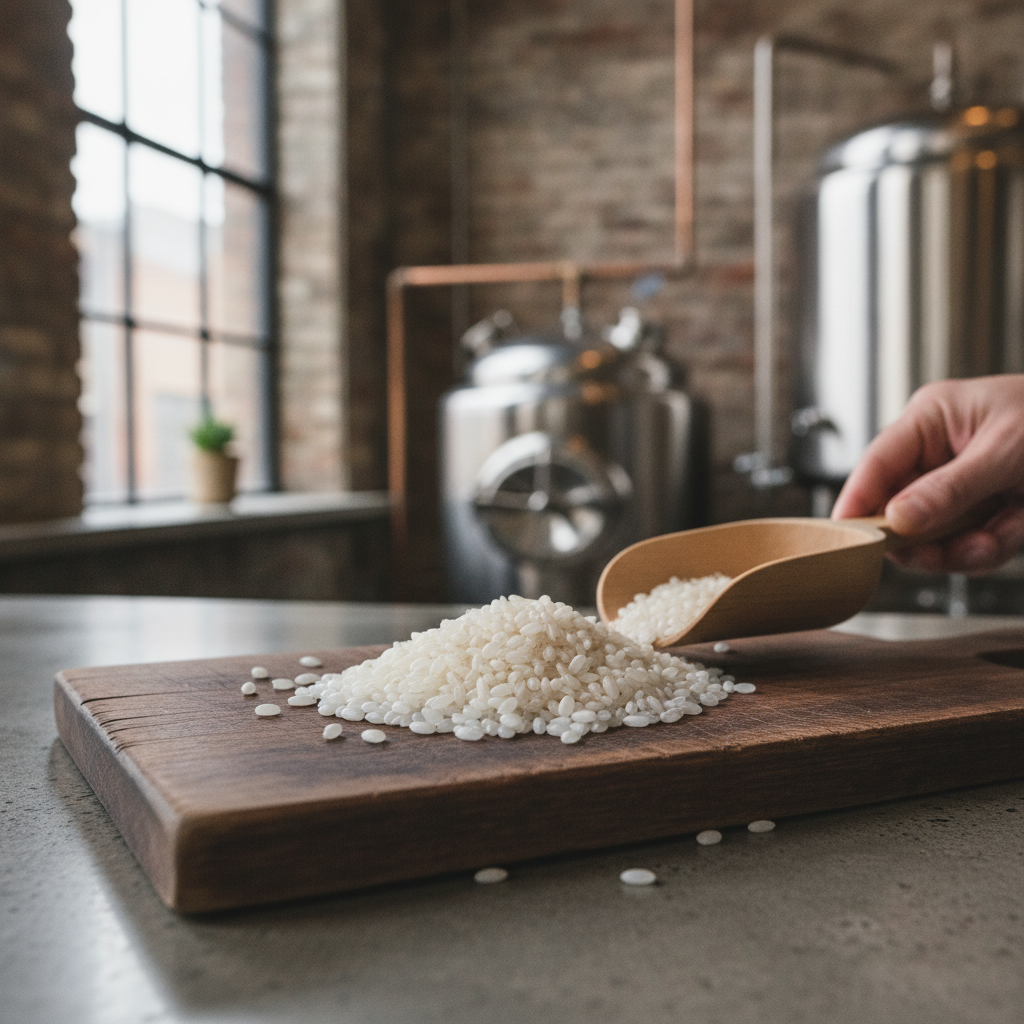
What it means. Sake is brewed from rice, water, koji, and yeast, and the rice is the part most drinkers never think about. Some rice is grown specifically for brewing: bigger grains with a starchy center and less fat and protein near the hull. The variety you choose, and how much of each grain you mill away, sets the whole character of the finished sake before fermentation even begins.
How it shows up in our tanks. We brew from American-grown rice. Most of our batches use Jupiter or Titan grown at Isbell Farms in England, Arkansas, and we bring in Yamada Nishiki for special batches. Then we mill. Our house seimaibuai for American Standard is 60 percent, which means we polish roughly 40 percent of every grain away before it ever sees water, stripping off the outer fats and proteins so the cleaner starchy center is what ferments. That 60 percent ratio is what makes nearly everything we brew Junmai Ginjo grade. See also: how sake is made.
What it tastes like / where to try it. Start with American Standard, our flagship Junmai Ginjo and the base every batch begins as, bottled at 15 to 16 percent ABV. It pours clean, with a slightly sweet melon character and gentle acidity. That is the milled-to-60-percent Jupiter or Titan rice tasting like itself.
What American drinkers get wrong. The big one is "rice wine." Wine is fermented from the fruit sugar already sitting in the grape. Rice has no free sugar, so sake is brewed closer to beer: koji mold converts the rice starch into sugar while yeast ferments it, both happening at once in the same tank. It is its own category, not a wine and not really a beer either. The other miss is assuming rice is rice. The variety and the polishing ratio do as much work here as grape and terroir do in wine. Our moromi batches read around 14 percent in the tank before pressing; the finished bottles come out at 15 to 16 percent ABV. More: what is rice wine?
Going deeper: the brewer’s details
These four terms go one layer deeper: the mold that makes sake possible, what it means that we bottle undiluted, what we do with the leftover press lees, and who runs the brewhouse. Each has a direct Colorado Sake Co. proof behind it.
Koji (Aspergillus oryzae)
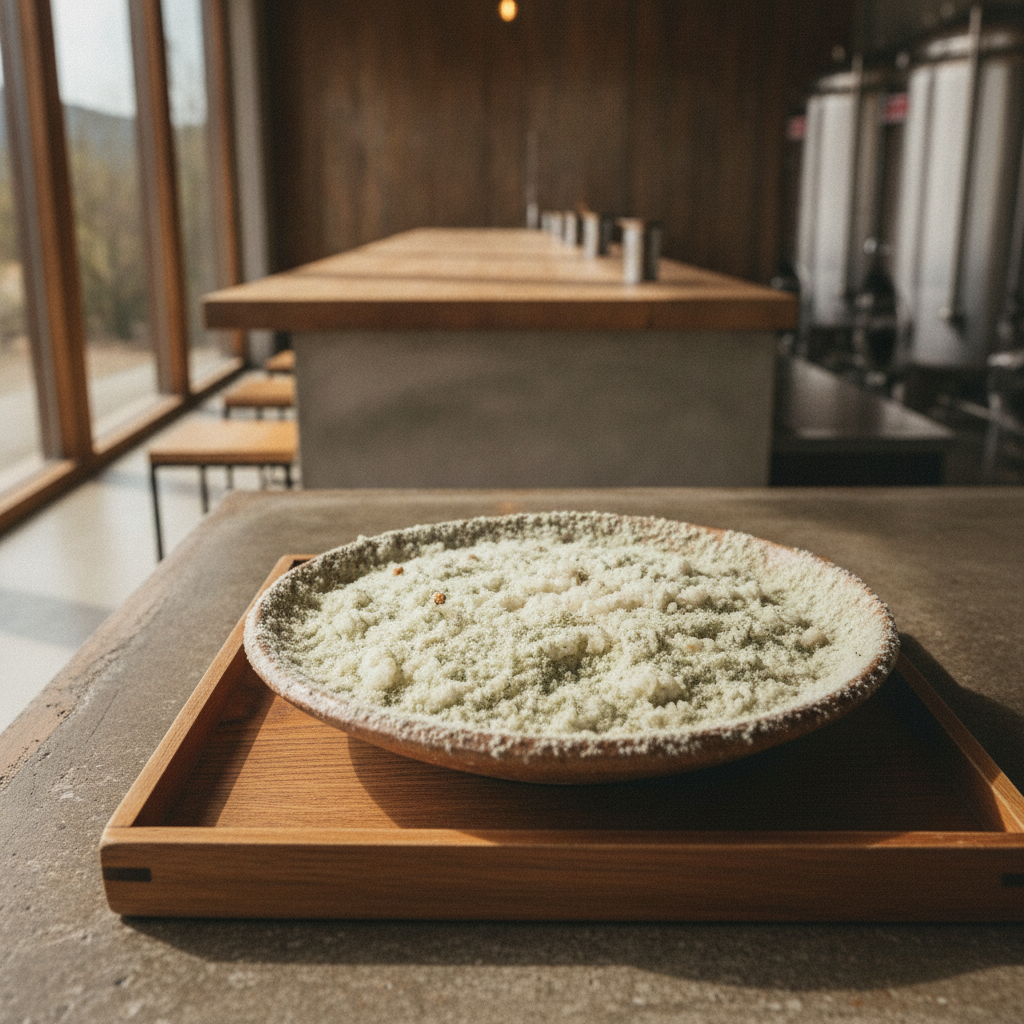
What it means. Koji is the mold that makes sake possible. A brewer inoculates steamed rice with koji-kin (seed koji, also called tane-koji), a cultivated form of the mold Aspergillus oryzae. The mold grows on the rice and secretes amylase enzymes that convert rice starch into fermentable sugars. Without koji doing that conversion job, there is no sugar for the yeast to eat, and therefore no sake. It is the first domino in the whole chain.
How it shows up in our tanks. We make our own koji on-site. The seed koji (koji-kin) we inoculate it with comes from Higuchi Matsunosuke in Japan, one of the oldest and most respected seed-koji producers in Japan. We use their "Hikami for Ginjo" strain, chosen specifically because it grows quickly and tolerates the higher temperatures of ginjo-style koji-making, which suits our Junmai Ginjo house grade. Every batch of American Standard, every nigori, every flavored release starts with this same koji grown on our floor in Denver. The seed-koji supplier is not decoration; it is a production decision that shapes how cleanly the starch converts and, downstream, how the finished sake tastes. See how koji fits into the full process at how sake is made.
What it tastes like / where to try it. Koji does not taste like much on its own; it is a process ingredient, not a flavor additive. What you taste in American Standard or either of our nigori bottles is the downstream result: koji made the sugar that the yeast ate, and the yeast's work is what became the alcohol. Pour it cold at 38 to 42F and what you are tasting is, in part, our koji doing its job.
What American drinkers get wrong. Most people have never heard of koji at all, which means they picture sake as "fermented rice" with rice simply soaking in water. That process would not work. Rice starch is not water-soluble sugar; it has to be enzymatically broken down first. Koji is the enzymatic step. The other miss is treating koji as some exotic ingredient. Aspergillus oryzae is on the Japanese national registry of safe microorganisms, used in miso, soy sauce, mirin, and sake for centuries. In our case, the seed koji ships from Higuchi Matsunosuke in Japan, lands in Denver, and goes to work on Colorado-grown rice. The supply chain crosses the Pacific; the koji-making happens here.
Genshu (undiluted sake)
What it means. Genshu means undiluted sake. After pressing, most commercial breweries add water to lower the alcohol, standardize the flavor profile, or increase yield. Genshu skips that step. The sake goes from the press to the bottle without any water added, so the bottled strength reflects the full fermentation exactly as it finished.
How it shows up in our tanks. Every Colorado Sake Co. sake is genshu. When our moromi finishes in the tank at around 14 percent on the final in-tank reading, we press it and bottle it without dilution. That undiluted press strength is the 15 to 16 percent ABV on the label. The two numbers tell the same story in sequence: the moromi reads lower because the reading captures the whole mash (rice solids, water, and alcohol together); the pressed, finished sake concentrates to 15 to 16 percent because the lees are removed. No water is added at any point after pressing. Every bottle we make, American Standard, Blueberry Hibiscus, Horchata Nigori, Lychee Nigori, is genshu.
What it tastes like / where to try it. Genshu typically has more body and presence than diluted sake because nothing has been cut. In American Standard that shows up as a clean, slightly sweet melon character with a fuller finish than most imported sake at similar grades. Pour it cold at 38 to 42F. The 15 to 16 percent ABV is not an edge case; it is the unmodified result of the fermentation we logged.
What American drinkers get wrong. The word "undiluted" makes genshu sound harsh or overproof. It is not. Diluted sake is the convention in Japan partly for cost, partly for style. Genshu just means the fermentation got to decide the final strength, not a dilution target. It also trips people up when they compare our 15 to 16 percent ABV to imported sake that runs 14 to 15 percent: the difference is not that we fermented harder, it is that we did not water it down after pressing.
Sake-kasu (the press lees)
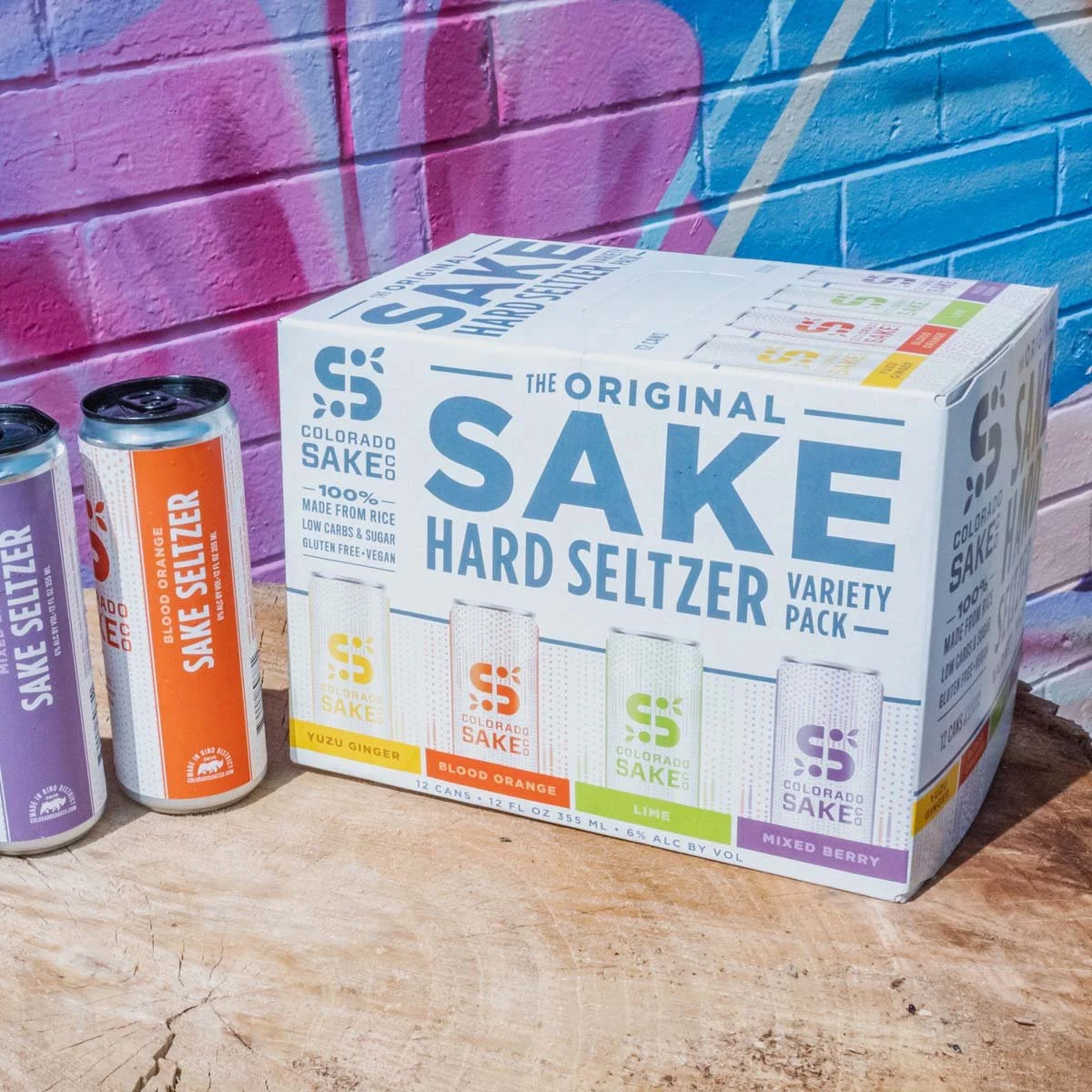
What it means. Sake-kasu, or simply kasu, is the solid that stays in the press after the sake is squeezed out. It is a dense, paste-like byproduct of pressed rice, koji, and spent yeast. Most sake breweries treat it as a secondary product: sold to food producers who use it in marinades, pickles, and skin-care ingredients, or discarded. It retains residual alcohol, enzymes, and nutrients from the fermentation.
How it shows up in our tanks. We do not sell ours or throw it away. We re-ferment it. The kasu from our press goes into a tank where it ferments down to about 6 percent ABV. That re-fermented kasu is what becomes our Sake Seltzer line, the world's first sake seltzer. Four flavors: Lime Salsa, Yuzu Ginger, Blood Orange, and Mixed Berry, all canned, all starting from the same pressed lees that most breweries consider a byproduct. The fermentation loop is complete: the rice goes in, American Standard comes out of the press, and what stays in the press becomes a finished, canned, shelf-ready product. Very little from that batch goes to waste.
What it tastes like / where to try it. Sake Seltzers are lightly carbonated, canned at 6 percent ABV, and built from the same Junmai Ginjo base as our core bottles. They are lighter and more effervescent than the bottled sake, with the flavor additions layered on a base that still carries a faint grain character from the kasu re-fermentation. Find them at the taproom at 3559 Larimer Street or in the online shop.
What American drinkers get wrong. The assumption is that sake seltzers are a flavored-alcohol-beverage brand with sake branding, not something actually made at a sake brewery from sake byproducts. Ours are not. They are a second fermentation of the physical residue from our press, made on the same floor, in the same tanks, by the same brewer. The sake and the seltzer come from the same batch of rice. Understanding sake-kasu is what makes that connection legible.
Toji (head brewer)
What it means. Toji is the head brewer in a sake brewery, the person responsible for every production decision: rice selection, water chemistry, koji cultivation, the temperature curve of the fermentation, when the moromi is ready to press. In Japan, the title is traditionally associated with a certification earned through years of apprenticeship and examination within the craft. The toji sets the character of every sake that leaves the building.
How it shows up in our tanks. Our brewer and toji is William Stuart, CSC's founder. He makes every call on the floor: which Colorado-grown rice to buy from Isbell Farms, which seed koji to source from Higuchi Matsunosuke in Japan, how to build the moromi through its sandan-shikomi additions, what the temperature profile should look like across the 24 to 35 days of fermentation, when to press. Every batch timeline you see in the interactive chart below is a record of his decisions, logged reading by reading on an Anton Paar density meter. Every bottle that leaves at 15 to 16 percent ABV, undiluted, is his call from start to finish. See also: how sake is made.
What it tastes like / where to try it. The toji's fingerprint is in every pour. American Standard is the most direct taste of what William's production philosophy produces: cold, patient fermentation, no added alcohol, no dilution after pressing. Come to the taproom at 3559 Larimer Street and there is a real chance he is behind the bar when you ask about it.
What American drinkers get wrong. People assume a small American craft sake brewery either imports its brewing expertise from Japan or operates without anyone who genuinely knows the process. At Colorado Sake Co., the founder is the brewer. William built the knowledge, designed the recipe, runs the batches, and reads the lab logs. The toji at most established Japanese breweries carries a formal credential from a Japanese certifying body; William's credibility comes from running the tanks here since we opened in 2018, with the lab records to back it up. Same role, different route.
Come taste what a brewery glossary tastes like. Every term above is something we do on the floor in our RiNo taproom, open since 2018. If you want to taste the seimaibuai, the moromi, the nigori press, pour one at the taproom at 3559 Larimer Street. If you want to read further, the full sake-making guide is at how sake is made, and the types and grades breakdown is at types of sake explained. Our Sake Seltzers are back in stock: canned, 6% ABV, in four flavors: Lime Salsa, Yuzu Ginger, Blood Orange, and Mixed Berry.
Frequently Asked Questions
Is sake a wine, beer, or spirit?
Sake is brewed, not distilled, so it is not a spirit. It is usually called "rice wine," but the process is closer to brewing beer: koji mould turns the rice starch into sugar while yeast ferments that sugar into alcohol, both happening at the same time in one tank (multiple parallel fermentation). That is exactly how every batch at Colorado Sake Co. is made.
Is it spelled "sake" or "saki"?
"Sake" is the correct spelling; "saki" is a common American misspelling. It is pronounced "sah-keh," not "sah-kee."
How much alcohol is in sake?
It varies, but our bottled sake is genshu (undiluted) and lands at 15 to 16 percent ABV. In the tank our moromi reaches about 14 percent before pressing; because we never water it down after the press, the bottle keeps that full strength.
What is nigori sake?
Nigori is unfiltered, cloudy sake. It is pressed loosely so some rice solids stay in the bottle, giving it a soft, often sweeter texture. Our Lychee Nigori and Horchata Nigori are both nigori-style.
Is Colorado Sake Co. really the only sake brewery in Colorado?
Yes. We are the first and only licensed sake brewery in Colorado, brewing in Denver’s RiNo Art District since September 2018.
What rice do you use to make sake?
We use American-grown rice, usually Jupiter or Titan from Isbell Farms in England, Arkansas, with Yamada Nishiki for special batches. It is milled to a 60 percent seimaibuai (polishing ratio) at our house Junmai Ginjo grade.