
Types of Sake Explained: Junmai, Ginjo, Daiginjo & Beyond
Quick answer: Sake is classified by rice-polishing ratio (seimaibuai) and whether brewer's alcohol is added. The premium "special designation" grades are Junmai (pure rice), Honjozo (a touch of added alcohol), Ginjo (rice milled to 60% or less), and Daiginjo (50% or less, the most refined). Other styles, Nigori (cloudy), Genshu (undiluted), Nama (unpasteurized), and Koshu (aged), describe how the sake is finished, and can overlap with any grade.
On this page
- Key Takeaways
- What Makes Sake Different, and What Polishing Means
- The Premium Grades: Junmai, Honjozo, Ginjo & Daiginjo
- Sake Grades at a Glance (Comparison Table)
- Beyond the Core Grades: Nigori, Genshu, Nama, Koshu & More
- Beyond the Grades: Production & Finishing Styles
- Tasting the Types: Where to Start
- Frequently Asked Questions
Key Takeaways
- Sake types are defined by the rice-polishing ratio (seimaibuai) and whether distilled brewer's alcohol is added.
- The four core premium grades are Junmai, Honjozo, Ginjo, and Daiginjo, Daiginjo is the most highly milled (50% or less) and aromatic.
- "Junmai" means pure rice (no added alcohol); it can be combined with Ginjo or Daiginjo (e.g. Junmai Daiginjo).
- Styles like Nigori, Genshu, Nama, and Koshu describe how a sake is finished and can apply across grades.
- Production choices, the starter method (Kimoto, Yamahai, Sokujo), pressing fraction, and finishing (Muroka, Taruzake, the nama sub-styles), add another layer beyond the grades.
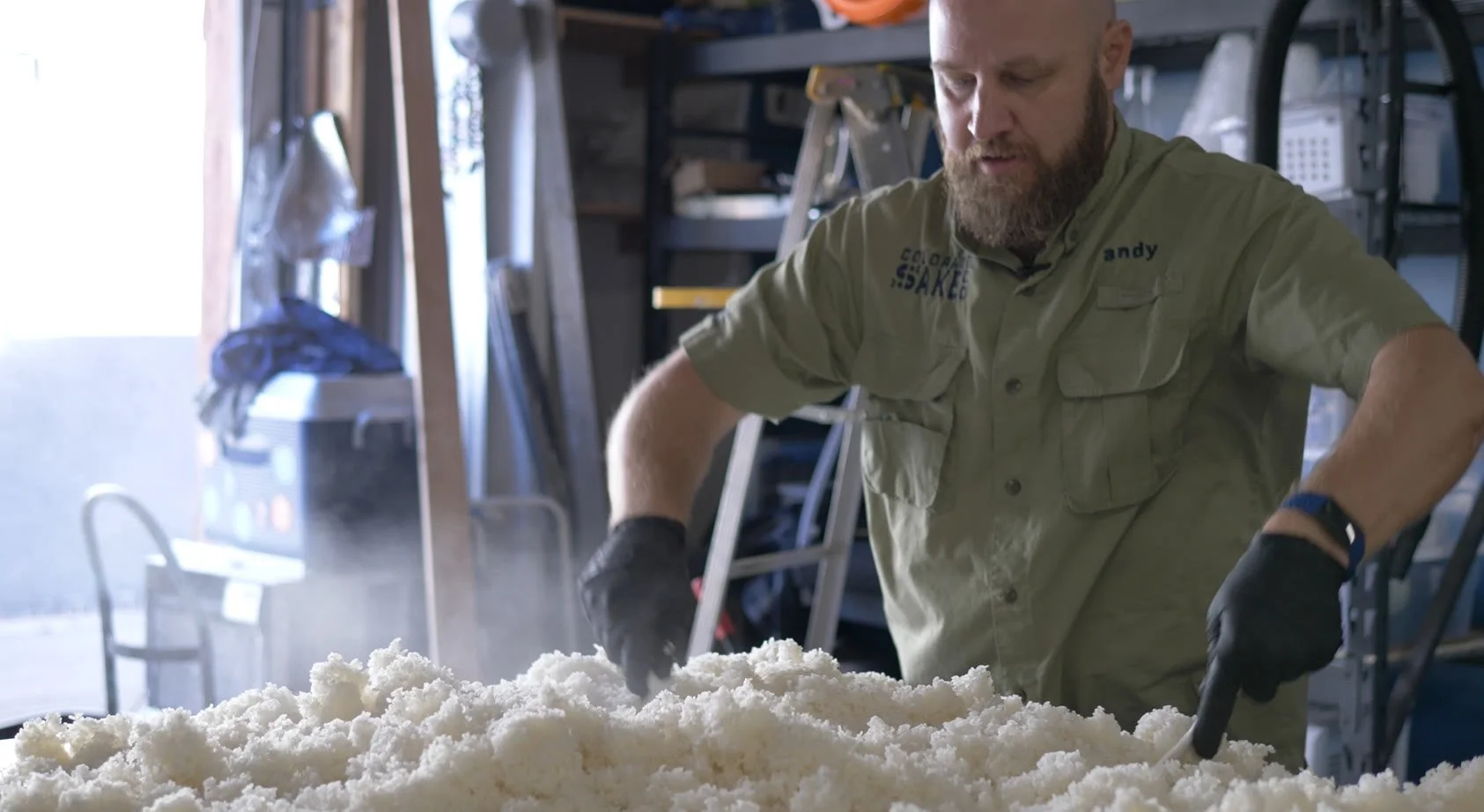
- Colorado Sake Co. brews fresh, unpasteurized sake in Denver's RiNo Art District.
What Makes Sake Different, and What Polishing Means
Sake is brewed, more like beer than wine. It starts with four ingredients, rice, water, yeast, and koji mold (Aspergillus oryzae), and a process rarely seen outside sake brewing. Because none of those four ingredients is wheat or barley, sake is naturally gluten-free at the ingredient level. Koji converts the rice's starch into sugar at the same time yeast turns that sugar into alcohol, a feat called multiple parallel fermentation. That dual action is part of why sake reaches roughly 15–16% ABV, a touch higher than most table wine.
The rice matters too. Brewing varieties like Yamada Nishiki and Gohyakumangoku have a dense starch core (the shinpaku) surrounded by proteins and fats that can throw off-flavors. Polishing, milling away those outer layers, is how brewers control the result.
The Art of Rice Polishing (Seimaibuai)
The seimaibuai, or rice-polishing ratio, is the single most important number on a sake label. It tells you the percentage of the grain that remains after milling. A seimaibuai of 60% means 40% of each grain has been polished away, leaving a purer starch core. Lower numbers generally mean a more refined, aromatic, delicate sake, and a lot more labor, since milling is slow and removes saleable rice. This one ratio is what separates everyday table sake from the premium grades below.

The Premium Grades: Junmai, Honjozo, Ginjo & Daiginjo
Japan's premium tier is called tokutei meisho-shu ("special designation sake"), eight legally defined types that represent the premium tier of the sake market. Everything else is futsushu, or ordinary table sake. The premium grades come down to two axes: the polishing ratio and whether brewer's alcohol is added. Here's each one.
Junmai: The "Pure Rice" Core
Junmai literally means "pure rice", sake made from only rice, water, yeast, and koji, with no added distilled alcohol. Since Japan deregulated the category in 2004, there's no longer a statutory minimum polishing ratio for plain Junmai; the defining trait is purity, not a milling threshold. Junmai tends to be full-bodied and savory, with pronounced umami, a touch more acidity, and real food versatility. This is our wheelhouse: at Colorado Sake Co. we focus on fresh, unpasteurized Junmai-style sake, which you can read more about in our story as Colorado's only sake brewery, brewing since 2018 in Denver.
Honjozo: A Touch of Brewer's Alcohol
Honjozo requires rice milled to a seimaibuai of 70% or less (at least 30% polished away) and adds a small, regulated amount of distilled brewer's alcohol late in the brew. The alcohol isn't there to fortify, it lightens the body, smooths the finish, and lifts certain aromas. The result is typically drier and cleaner than Junmai, and it takes warming especially well, which makes it a friendly partner at the table.
Ginjo: Aromatic Elegance
Ginjo is a step up in refinement: the rice must be polished to 60% or less (at least 40% removed), and it's brewed slowly at cool temperatures with aromatic yeast strains. That care produces the fruity, floral profile sake is famous for, think apple, pear, melon, sometimes banana. Ginjo is usually served chilled to protect those delicate aromatics, and it's a fantastic on-ramp for anyone new to premium sake. (If a Ginjo is made with no added alcohol, it becomes Junmai Ginjo, see below.)
Daiginjo: The Pinnacle of Polish
Daiginjo means "great Ginjo," and it earns the name. The rice is milled to 50% or less, at least half of every grain ground away, and brewed even more meticulously, often at lower temperatures over a longer fermentation. The payoff is the most aromatic, delicate, and ethereal style of all: complex fruit and floral notes and a silky texture. Daiginjo is typically the priciest tier and is best enjoyed chilled in a wine glass that concentrates its perfume. The Japan Sake and Shochu Makers Association publishes the full legal definitions if you want the letter of the law.
Junmai Ginjo & Junmai Daiginjo: Best of Both Worlds
When you see "Junmai" paired with "Ginjo" or "Daiginjo," it means the sake meets that grade's polishing requirement and uses no added brewer's alcohol. A Junmai Ginjo is Ginjo-grade (60% or less) made purely from rice; a Junmai Daiginjo is Daiginjo-grade (50% or less) made purely from rice. These often sit at the top of a brewery's range, marrying aromatic elegance with pure-rice depth.
Tokubetsu: "Special" Junmai & Honjozo
Tokubetsu means "special." A Tokubetsu Junmai or Tokubetsu Honjozo is one the brewer has distinguished in some way, usually extra rice polishing (often around 60%) or a notable rice variety or method. It's the brewer flagging, "this one's a cut above our standard bottling."
Sake Grades at a Glance
Here's how the core premium grades stack up on the two things that define them, rice polishing and added alcohol, plus the flavor you can generally expect.
| Grade | Max rice remaining (seimaibuai) | Brewer's alcohol added? | Typical flavor |
|---|---|---|---|
| Junmai | No legal minimum (pure rice) | No | Full-bodied, savory, umami-rich |
| Honjozo | 70% or less | Yes (small amount) | Light, dry, clean, smooth |
| Ginjo | 60% or less | Yes (small amount) | Aromatic, fruity, floral |
| Junmai Ginjo | 60% or less | No | Aromatic with pure-rice depth |
| Daiginjo | 50% or less | Yes (small amount) | Highly refined, delicate, complex |
| Junmai Daiginjo | 50% or less | No | The most elegant pure-rice style |
A lower seimaibuai means more of the grain has been polished away. "60% or less" means at most 60% of the original grain remains.
Beyond the Core Grades: Nigori, Genshu, Nama, Koshu & More
The grades above describe milling and ingredients. The terms below describe how a sake is finished, so a single bottle can be, say, a Junmai Nigori Nama. These are the words that most often confuse newcomers, so here's a quick map.
Nigori: The Cloudy One
Nigori is coarsely filtered, leaving fine rice particles that give it a cloudy, milky look and a creamy texture. It ranges from dessert-sweet to surprisingly dry, and it's a natural with spicy food. Want the full picture? We wrote a deep dive: Nigori Sake 101.
Genshu: Undiluted
Most sake is cut with a little water before bottling to bring it to about 15–16% ABV. Genshu skips that step, it's undiluted, so it lands fuller and stronger, often 18–20% ABV. Bold flavor, more punch; sip accordingly.
Nama-zake: Fresh & Unpasteurized
Most sake is pasteurized twice for stability. Nama (or nama-zake) is unpasteurized, fresher, livelier, and more vibrant, like a fresh craft beer pulled straight from the source. It needs refrigeration and is best enjoyed young. This is exactly what we pour at Colorado Sake Co.: fresh, unpasteurized sake delivered to your glass in RiNo, full of bright, nuanced character.
Koshu: Aged Sake
Where most sake shines young, Koshu is deliberately aged. It develops amber color and deep notes of honey, nuts, spice, even sherry-like character. A niche category, but a rewarding one for the curious.
Sparkling Sake & Sake Seltzer
Sparkling sake ranges from lightly effervescent to fully fizzy, often lighter and a little sweeter. We've run with the idea and built our own fresh sake seltzers, bright, bubbly, and made for a sunny Colorado afternoon. More on the category in our complete guide to sparkling sake.
Futsushu: Everyday Table Sake
Finally, futsushu ("ordinary sake") is everything outside the special-designation grades, the majority of sake consumed in Japan. There's no minimum polishing ratio, and it's the everyday, easy-drinking pour. Perfectly good; just not held to the premium standards.

Beyond the Grades: Production & Finishing Styles
Grades tell you about milling and ingredients, but two bottles of the same grade can taste worlds apart depending on how they were made. The vocabulary below shows up on serious sake labels and on tasting menus, and it maps the production and finishing choices a brewer makes. Knowing these terms is what separates a casual drinker from someone who can read a bottle.
The Starter Method: Kimoto, Yamahai & Sokujo
Every batch of sake begins with a shubo (yeast starter), and how a brewer builds it shapes the whole brew.
- Kimoto, the traditional, labor-intensive method where brewers hand-pole the mash so naturally occurring lactic-acid bacteria can build up; it yields a richer, more acidic, deeply structured sake.
- Yamahai, a Kimoto offshoot that skips the pole-ramming step but still relies on naturally occurring lactic-acid bacteria, producing earthy, gamey, full-bodied sake with a wild edge.
- Sokujo, the modern "fast" method that adds lactic acid directly for a clean, stable, fruit-forward starter; it's the default for most contemporary sake.
The Pressing Fraction: Arabashiri, Nakadori & Seme
When the fermented mash is pressed, the liquid that comes off changes character from start to finish, and brewers sometimes bottle each fraction separately.
- Arabashiri, the first free-run sake that flows before any pressure is applied; lively, slightly cloudy, and aromatic.
- Nakadori (or nakagumi), the middle pressing, prized as the most balanced and refined fraction, often reserved for a brewery's flagship bottles.
- Seme, the final, hard-pressed fraction; bolder and rougher, with more pronounced edges.
Finishing Choices: Muroka, Taruzake & the Nama Sub-Styles
- Muroka, sake that skips the usual charcoal filtration, keeping more color, aroma, and full flavor.
- Taruzake, sake matured in cedar (sugi) casks, which lend a fragrant, woody, almost piney note.
- Namazake, fully unpasteurized; fresh, vivid, and refrigerated.
- Nama-chozo, unpasteurized during storage but pasteurized once at bottling, keeping some of that fresh liveliness.
- Nama-zume, pasteurized before storage but bottled unpasteurized, a different take on freshness.
- Shiboritate, "freshly pressed"; bottled right after pressing for a youthful, zesty, just-made character.
Production & Finishing Styles at a Glance
| Style | What defines it | Typical character |
|---|---|---|
| Kimoto | Traditional hand-poled lactic-acid starter | Rich, acidic, structured |
| Yamahai | Wild lactic-acid bacteria, no pole-ramming | Earthy, gamey, full-bodied |
| Sokujo | Added lactic acid, modern fast starter | Clean, stable, fruit-forward |
| Arabashiri | First free-run pressing fraction | Lively, aromatic, slightly cloudy |
| Nakadori | Middle pressing fraction | Balanced, refined, flagship-quality |
| Seme | Final hard-pressed fraction | Bold, rough-edged |
| Muroka | No charcoal filtration | Fuller color, aroma & flavor |
| Taruzake | Aged in cedar casks | Woody, fragrant, piney |
| Shiboritate | Bottled right after pressing | Youthful, zesty, fresh |
Tasting the Types: Where to Start
The fastest way to understand sake grades is to taste them side by side. Start with a savory Junmai and an aromatic Ginjo or Daiginjo, the contrast between earthy umami and bright fruit makes the whole classification system click. From there, branch into a cloudy Nigori or a fresh nama to feel how finishing styles change the experience. If you're brand new, our beginner's guide to sake tasting walks you through how to taste with intention. Different grades shine alongside different dishes, too, for that, see our dedicated guide to what to eat with sake.
American craft sake is its own frontier here, and it's where the Japanese taxonomy starts to bend. We're brewing fresh, unpasteurized sake a mile high in Denver, and brewers across the country are reinterpreting these traditional grades with US-grown rice, local water, and unpasteurized nama styles that don't always map cleanly onto Japan's grading system, which grew up around Japanese sake-rice traditions and milling infrastructure. Our own house sake leans into that freedom, we brew Junmai Ginjo, milled to a 60% polishing ratio (seimaibuai), from American-grown rice (typically Jupiter or Titan from Isbell Farms in England, Arkansas, with Yamada Nishiki for special batches), rather than chasing imported milling specs, and the broader movement includes the growing American rice-growing story out of Arkansas. The grades are Japanese in origin, but the craft is increasingly homegrown. Note, too, that U.S. labeling and classification fall under the Alcohol and Tobacco Tax and Trade Bureau (TTB), whose rules govern how American sake reaches your glass.
Ready to taste the difference for yourself? Stop by our taproom in the RiNo Art District for a flight, plan your visit, or browse and order from our sake store.
Frequently Asked Questions
What's the difference between Junmai and Daiginjo sake?
What are the main types of sake?
What does the rice-polishing ratio (seimaibuai) mean?
What is the difference between Kimoto, Yamahai, and Sokujo sake?
Come taste it for yourself
Colorado Sake Co. pours fresh, small-batch sake in the RiNo Art District. Visit the taproom or order sake online.
Colorado Sake Co. serves guests 21+. Please enjoy sake responsibly.
Keep exploring
Run into a word you did not know? Our Sake Field Guide is a plain-language glossary of the terms on every bottle, from junmai and ginjo to koji, nigori, genshu, and seimaibuai, written by the brewers who use them.