
How We Brew American Sake in Denver: Rice, Water, Koji, and Altitude
American sake is sake brewed in the United States. The address changes; the core ingredients and fermentation do not. At Colorado Sake Co. in Denver, we brew with rice, water, koji, and yeast, using koji to make rice starch available to yeast during multiple parallel fermentation.
This is a case study of our process, not a claim that every American brewery works the same way. We use American-grown rice, make our own koji on site, rebuild our water in house, and ferment the main mash cold. Denver's altitude is part of where we work, but it is not a shortcut or a marketing claim about quality.
Quick answer: Our house grade is Junmai Ginjo at a 60% seimaibuai. We primarily use Jupiter or Titan rice from Isbell Farms in England, Arkansas; make reverse-osmosis water and add salts toward the mineral balance of Miyamizu; grow koji on site; ferment the moromi for roughly 24-35 days; and bottle every CSC sake as genshu at 15-16% ABV.

On this page
Key Takeaways
- American sake is defined here by where it is brewed, not by a different fermentation category.
- CSC's house grade is Junmai Ginjo at a 60% seimaibuai, made primarily with Jupiter or Titan rice from Isbell Farms in England, Arkansas.
- We make reverse-osmosis water in house and add salts toward the mineral balance of Miyamizu.
- We grow koji on site with seed koji from Higuchi Matsunosuke and use its Hikami for Ginjo starter for our house grade.
- Our moromi runs roughly 24-35 days, and every CSC sake is bottled as genshu at 15-16% ABV.
What does American sake mean?
For this article, American sake means sake brewed in the United States. Rice origin, equipment, house method, and flavor can vary by producer, so the label does not describe one universal style.
At our brewery, the Japanese vocabulary still matters. Junmai means we do not add distilled brewer's alcohol. Ginjo identifies a grade whose rice-polishing and brewing requirements include a seimaibuai of 60% or less. Nigori describes a coarsely filtered sake; it does not mean the liquid skipped filtration altogether. The underlying process still relies on rice, water, koji, yeast, and multiple parallel fermentation.
The useful distinction is not “real” versus “American.” It is who brewed the bottle, with which ingredients, and by what process. The details below are the answers for Colorado Sake Co.

How we brew American sake in Denver
Our process is a chain of controlled choices. Rice variety and polishing set the raw material. Water treatment gives us a repeatable starting point. Koji converts starch into fermentable sugars, while yeast converts those sugars into alcohol. A cold moromi gives that work time to unfold. Pressing separates the liquid from the lees, and a genshu finish preserves the undiluted strength from the press.
That summary leaves out plenty of hands-on work, but it captures the choices that distinguish this brewery. The sections below tie each claim to a documented house specification.
Rice: Jupiter and Titan from Arkansas
We primarily brew with Jupiter or Titan rice from Isbell Farms in England, Arkansas. For special batches we also use Yamada Nishiki. Our house polishing ratio is a 60% seimaibuai, meaning 60% of the original grain remains after milling.
American-grown rice is not a substitute hidden behind the label; it is a named part of the recipe. The longer story of the farm and varieties belongs in our guide to Arkansas sake rice.
Water: a repeatable house profile
We make reverse-osmosis water in house, take it to a near-zero starting point, and add salts back toward the mineral balance of Miyamizu, the brewing water associated with Japan's Nada region.
That is the verified process. Treating and rebuilding the water gives each batch a defined starting profile.
Koji and cold fermentation
We make our own koji on site. The seed koji comes from Higuchi Matsunosuke in Japan, and we use its Hikami for Ginjo starter for our Junmai Ginjo house grade. We inoculate steamed rice with that starter and manage the growth of Aspergillus oryzae.
In the main mash, koji enzymes make rice starch available as sugar while yeast ferments sugar into alcohol. Those linked processes are why sake is described as multiple parallel fermentation. Our moromi typically runs roughly 24-35 days before pressing.
For the measured version, our fermentation-temperature study separates batch observations from brewery folklore. It is the right place for the data; this article stays with the repeatable house process.
What does altitude change?
Colorado Sake Co. brews in Denver at 5,280 feet. That is a verifiable location fact, not proof that altitude makes our sake better, faster, or fundamentally different.
We monitor the process we actually run: water preparation, rice, koji, fermentation, and the decision to press. Without a controlled comparison against the same brewery at another elevation, stronger altitude claims would be marketing dressed as data. The honest answer is that altitude is part of our setting; the documented production choices are what define the batch.
Why every CSC sake is genshu
Every Colorado Sake Co. sake is genshu, meaning we do not add water after pressing. Our bottled sake lands at 15-16% ABV, which is the undiluted press strength for the finished product.
That house-wide fact is more useful than an unsupported house-wide claim about pasteurization. Individual products can have their own handling notes, but this article does not describe every CSC bottle as nama or unpasteurized.
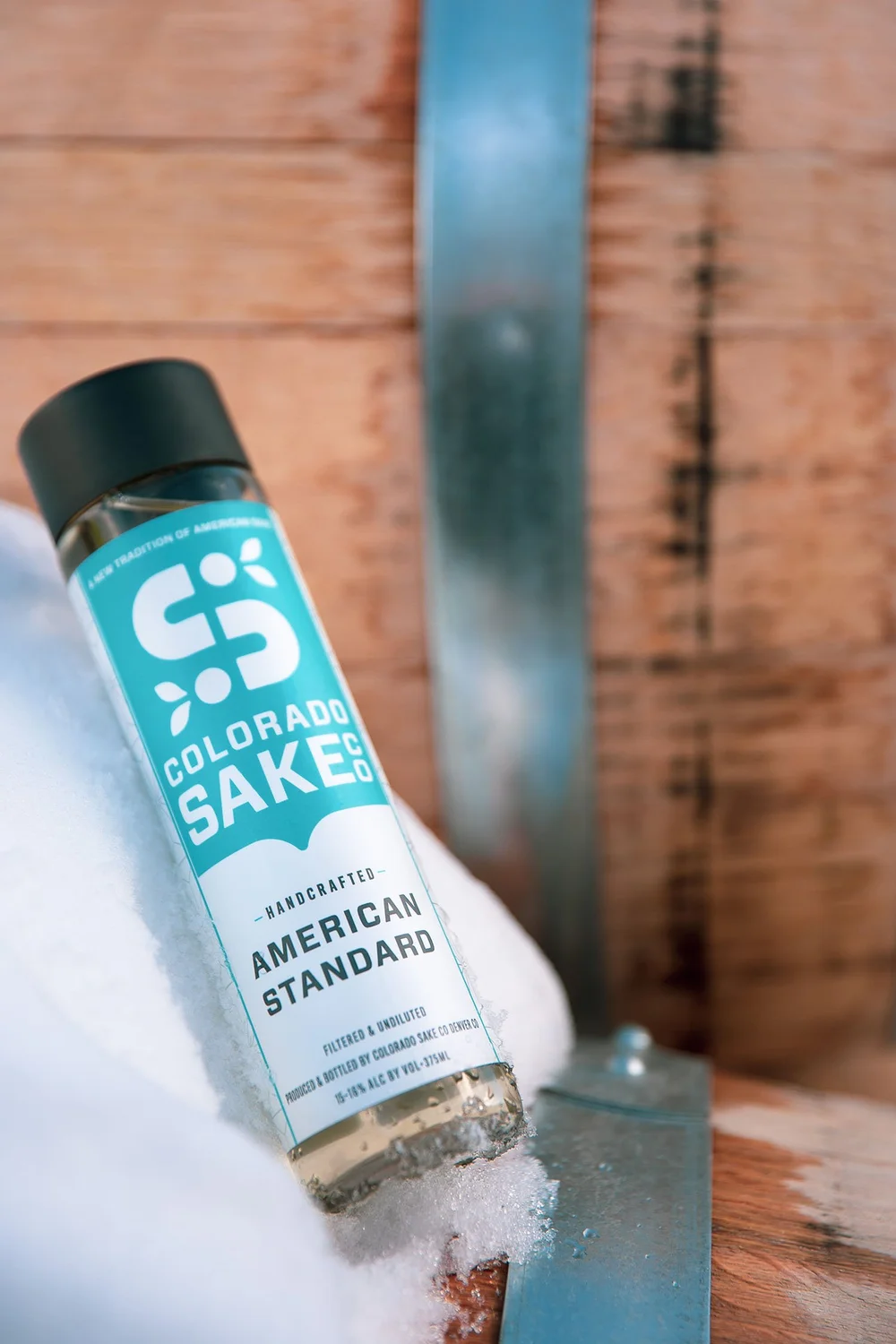
American Standard shows the clean, slightly sweet melon character and gentle acidity of our core Junmai Ginjo. For a different expression, our Lychee Nigori brewing guide explains how one flavored release fits into the same brewery.
Where to try our American sake
The direct place to compare our current pours is the Colorado Sake Co. taproom in Denver's RiNo Art District. Check the current brewery menu before visiting, or use the online sake store to see what is available for shipping.
We are not claiming that one bottle represents every American sake producer. A flight simply lets you compare several CSC expressions side by side and connect the finished drinks to the rice, water, koji, fermentation, and genshu choices described above.
For the local business story behind the brewery, read how Colorado Sake Co. navigated the RiNo brewery shakeout. That history is separate from the production method, but both explain why this sake is made here.
Frequently Asked Questions
What is American sake?
What rice does Colorado Sake Co. use?
How does Colorado Sake Co. prepare its brewing water?
Does Denver altitude make sake better?
Is Colorado Sake Co. sake genshu?
Taste the process in RiNo
Compare current Colorado Sake Co. pours at the Denver taproom or see available bottles in the online sake store.