The short answer
Warm sake gently, not in a hurry. Heat water separately in a saucepan or pot until just before boiling, then turn off the burner and move the pot off the heat before adding an open sake-warming carafe. Let the water cool first if needed to stay within the carafe's water-bath limits. The water warms the sake indirectly; the filled carafe never goes on an active burner. Measure the sake itself with a food thermometer and try about 104°F (40°C) for a first warm tasting. Let the pour cool before sipping if needed. 1, 2
It's best to use an undamaged, heat-rated sake-warming carafe or bottle. Never warm a sealed container, put refrigerator-cold glass into hot water, or place a carafe or bottle directly on a burner. 4
The aim is a warm, expressive pour—not boiling sake. Keep sparkling sake chilled and sealed cans out of this method. 1
For background on cups, serving and etiquette, see how to drink sake.
How to warm sake with a heat-off water bath
Gather a saucepan or pot tall enough to hold the bottle or carafe securely with its opening well above the waterline, a sake-warming carafe, a food thermometer, and dry heat-protective mitts. Choose still sake and warm only what you plan to serve.
- Prepare the carafe and sake. Gradually prewarm the carafe or bottle with lukewarm water. Remove any cap completely and keep the opening unobstructed. Avoid sudden temperature changes; do not run cold glass under hot water.
- Heat the water separately. Fill the pot to a depth that will surround the carafe without reaching its opening or exceeding its permitted immersion depth. Keep the carafe out of the pot while heating the water until just before boiling. Turn off the burner and move the pot to a stable, heat-resistant surface away from the heat. Let the bath cool as needed to meet the carafe's permitted conditions; near-boiling water is not a requirement for every vessel. 2
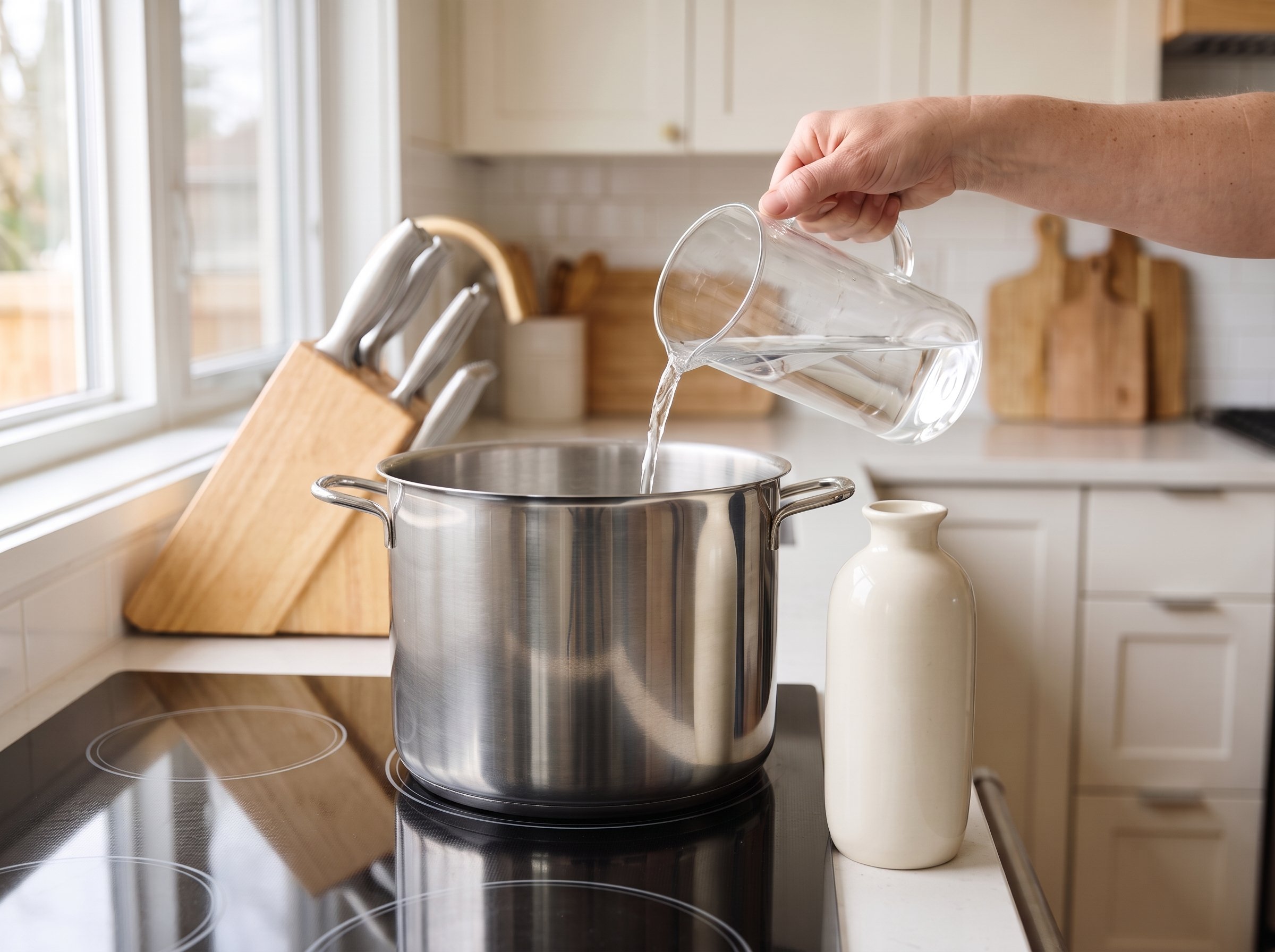
- Warm the sake with the heat off. Carefully stand the open, filled carafe upright in the water, with its opening well above the waterline so bath water cannot enter the sake. Leave the pot off the heat throughout warming, and stay with it. Do not boil the sake or return the pot to an active burner with the carafe inside.
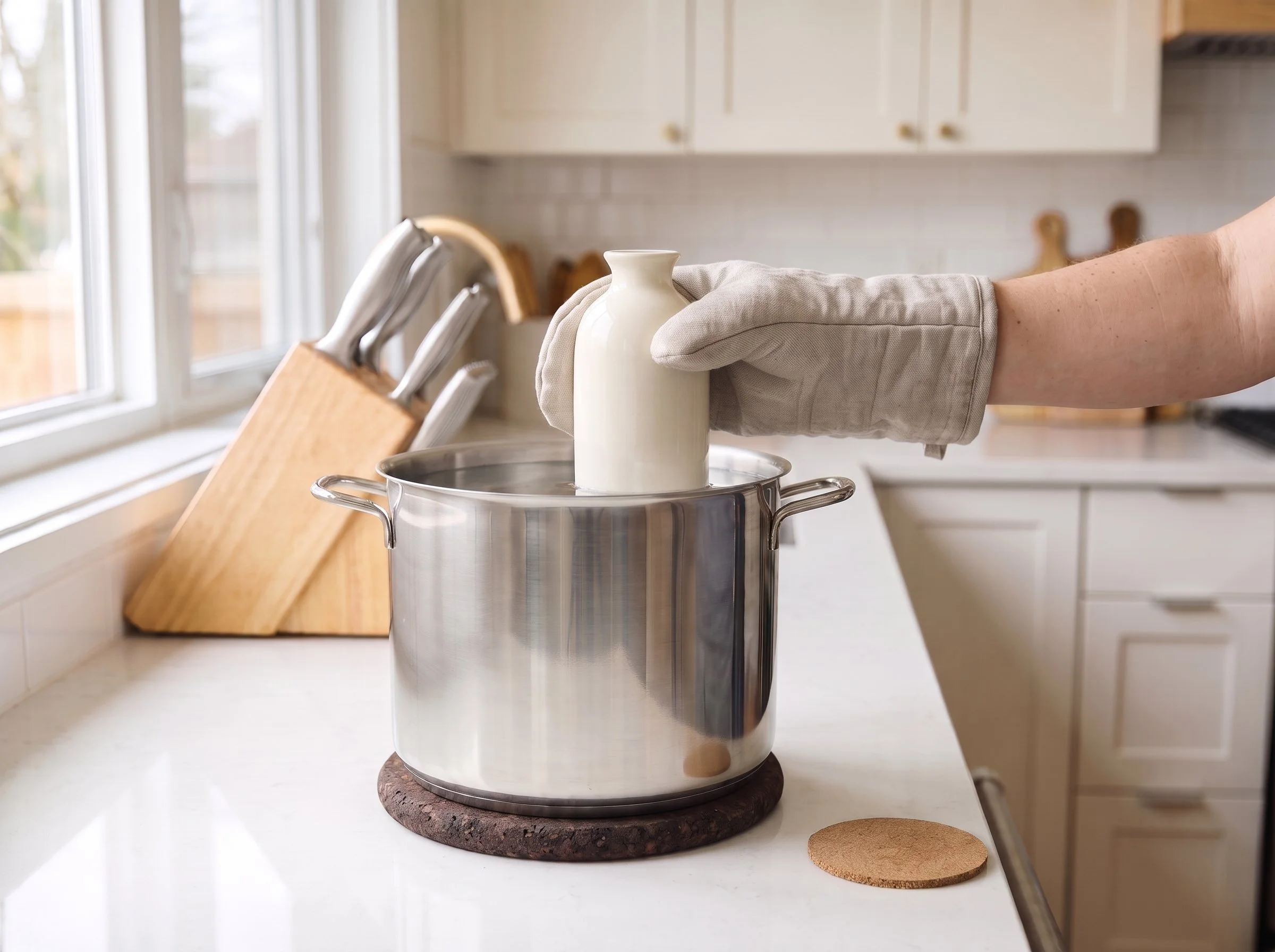
- Measure the sake, not the bath. Use a clean food-thermometer probe in the sake without resting its tip on the carafe; follow the thermometer's immersion instructions. Gently stir only if the opening allows it without striking the carafe or making it unstable. Begin around 104°F (40°C) for a warm tasting. That is a serving-temperature reference, not a vessel rating or a burn-safety guarantee. Don't judge by a fingertip or the warmth of the outside of the carafe.
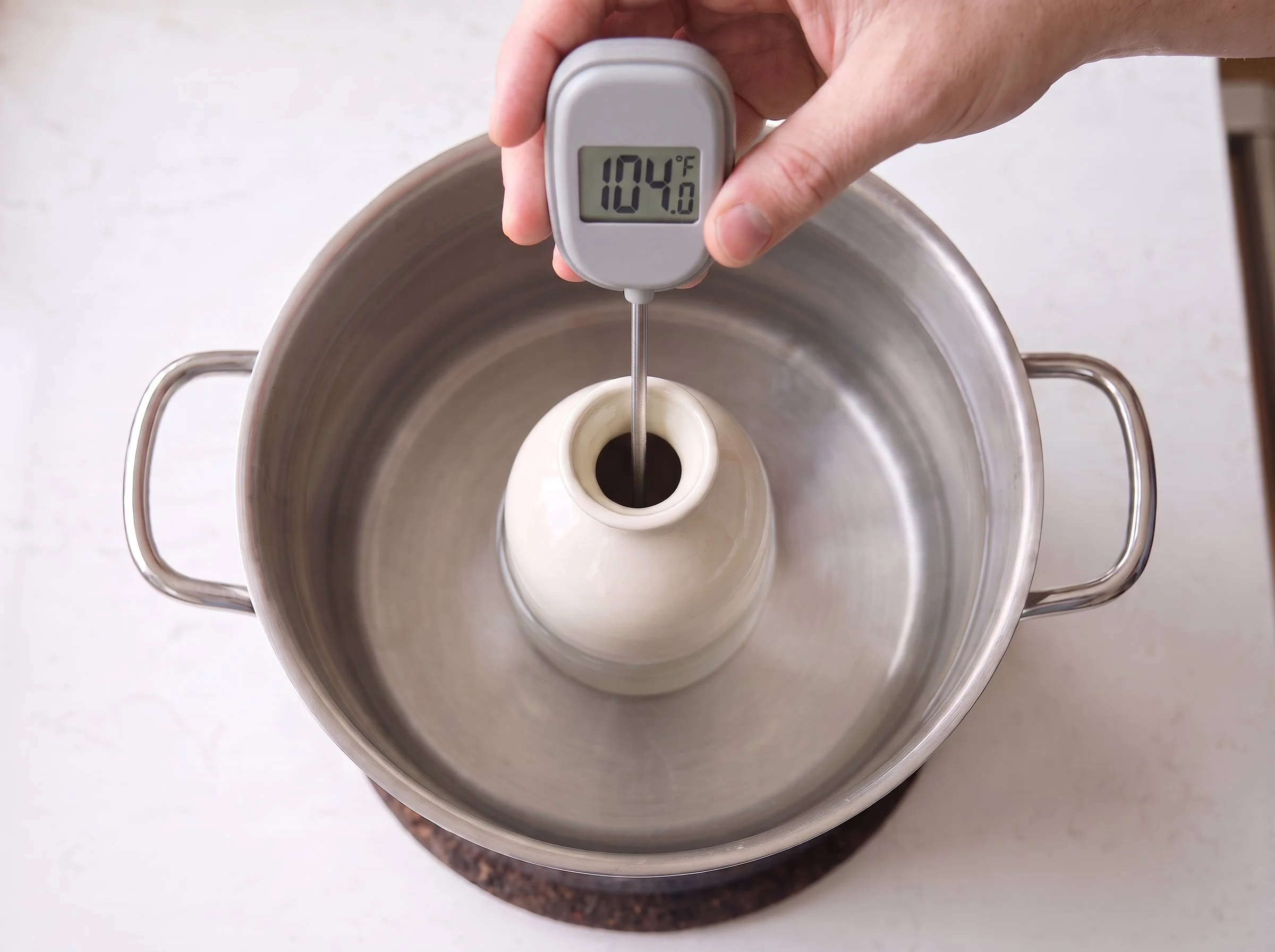
- Lift out and pour carefully. Once the sake reaches your chosen serving temperature, lift out the carafe with dry heat protection. Set it on a dry, heat-resistant trivet—not a cold or wet counter—and pour small servings. The carafe and bath water can still burn even though the heat is off; let the sake cool if needed before drinking. 4
Use the thermometer, not a fixed timer. The amount of sake, its starting temperature, the carafe, and the bath all affect how quickly it warms. If the bath cools before the sake reaches your target, remove the carafe before reheating the water separately, then repeat the heat-off sequence within the carafe's limits.
What temperature should warm sake be?
| Name | Celsius | Fahrenheit | Useful reference |
|---|---|---|---|
| Hitohada-kan | 35°C | 95°F | Gently warm, traditionally described as skin/body warmth |
| Nuru-kan | 40°C | 104°F | A sensible first warm tasting |
| Jo-kan | 45°C | 113°F | A warmer comparison if the sake suits it |
| Atsu-kan | 50°C | 122°F | Traditionally hot sake |
| Tobikiri-kan | About 55°C and above | About 131°F and above | Very hot; not our beginner recommendation |
Start lower and compare small pours. A higher temperature is not automatically better. Hakushika cautions that above 55°C (131°F), finer characteristics can be overwhelmed by alcohol aroma. That is flavor guidance, not a universal injury threshold or permission to heat any bottle to that temperature. 3
What heat actually does to sake
Temperature changes aroma, perceived sweetness, umami and mouthfeel. Around body warmth, sweetness and umami can become more noticeable. At higher temperatures, the sensation of alcohol can become more pungent. Those changes depend on the sake; warming does not guarantee that every bottle becomes smoother or better. See what sake tastes like. 1
A useful distinction: fuller flavor is not the same thing as thicker liquid. JSS describes chilled sake as more viscous, and warmed sake as less viscous even when its flavor seems fuller. Delicate fruity or floral aromas can become more pronounced or change as sake warms, then dissipate with excessive heating. 1, 2, 3
The fermentation behind those aromas
Sake is brewed from rice through multiple parallel fermentation. Koji is rice cultivated with the mold Aspergillus oryzae. Enzymes supplied by the koji break rice starch into sugars while yeast converts those sugars into alcohol in the same mash. Wine also undergoes fermentation; the distinction is that grape juice already contains fermentable sugars, whereas sake brewing must first make rice starch available as sugar. 7
Brewing choices, including yeast and fermentation temperature, help shape sake's aroma. Warming changes how you experience the finished drink; it is not a step for restarting fermentation. For more on the process, see how we brew American sake in Denver. 7
Which sake should you try warm?
Some rice-forward junmai, kimoto, yamahai and aged sake are rewarding candidates. Treat that as a starting point, not a rule that every sake in those categories improves with heat. Delicate ginjo and daiginjo are often enjoyed chilled, but JSS also suggests gentle warming around 40°C (104°F). 1, 3
Nama and many nigori are commonly enjoyed chilled; follow the producer's recommendation rather than treating either name as an absolute prohibition on warming a serving. Sparkling sake is different: heat releases its carbonation, and this guide does not recommend warming it. Learn more in our nigori guide and complete guide to sake. 1, 3
For Colorado Sake Co. bottles, check the current label and ask the brewery which still sake it recommends trying warm. Genshu means sake that has not been diluted with water to adjust alcohol content; it does not specify one ABV. A 60% rice-polishing ratio means 60% of the original grain remains—not 60% removed. Neither term tells the whole flavor story, so experiment with a small serving first. 7
Keep it warm without heating the whole bottle
Warm small servings and pour a little at a time. If a serving cools before you finish it, follow the same heat-off sequence within the carafe's instructions and check the sake temperature again; do not plunge cooled glass into a hot bath. Avoid repeated heating cycles just to keep a large quantity hot; aromatic character can be lost with excessive heating. Do not pour warmed leftovers back into the original bottle. 1, 3
Warming does not make sake alcohol-free, and a stronger alcohol aroma is not proof that its ABV has increased. Do not use warming as a way to control intoxication or make a drink safe for driving. For labeled alcohol content, see sake alcohol versus wine.
Can I use a microwave?
Not with the commercial bottle, a sealed container, a can, or a vessel with metal decoration. If you choose a microwave, transfer a small serving of still sake to an open, wide-mouth, microwave-safe cup and follow both the appliance and cup instructions. Use short intervals, stir between them, and measure the sake after stirring; remove the thermometer before microwaving unless it is specifically designed for that use. Handle hot cups carefully and stop well before boiling. The water bath is easier to monitor gradually. 1, 8
Bring a warm pour to the table
Try a small warm pour beside a chilled one and notice what changes. Our sake and sushi pairings can help you choose a bite to go alongside it. Looking for a different drink next time? Browse our fall sake cocktails.
Visit our RiNo taproom to ask about the current selection, or browse our sake store. Remember: a suitable open carafe, water heated separately, pot off the heat before the carafe goes in, and a thermometer in the sake.
Warm sake FAQs
Does the saucepan stay on the heat?
No. Heat the water separately until just before boiling, then turn off the burner and move the pot off the heat before adding the open carafe. Allow the bath to cool if needed for the carafe's limits, and leave the pot off the heat while the sake warms.
Should I prewarm the carafe first?
If its instructions allow, gradually prewarm the empty carafe with lukewarm water, drain it, then fill it with sake. Avoid sudden temperature changes, and keep the bath within the carafe's limits.
How long should I warm it, and where does the thermometer go?
There is no universal full-bottle time. Put the food-thermometer probe in the sake, not just in the bath, and start with about 104°F (40°C) as a tasting reference—not a glass rating or a promise that it cannot burn. Remove the cap completely before any warming; do not use a fingertip test.
Does warming make sake stronger or restart fermentation?
Warming changes the aroma and the way sake tastes; a stronger alcohol aroma does not prove a higher ABV. It does not restart the brewing process or make sake alcohol-free. The fermentation explanation above describes brewing, not something to reproduce while warming a pour.
Colorado Sake Co.